Tears

“Thus says the LORD:
Lo, I am about to create new heavens
and a new earth;
The things of the past shall not be remembered
or come to mind.
Instead, there shall always be rejoicing and happiness
in what I create;
For I create Jerusalem to be a joy
and its people to be a delight;
I will rejoice in Jerusalem
and exult in my people.
No longer shall the sound of weeping be heard there,
or the sound of crying;
No longer shall there be in it
an infant who lives but a few days,
or an old man who does not round out his full lifetime;
He dies a mere youth who reaches but a hundred years,
and he who fails of a hundred shall be thought accursed.
They shall live in the houses they build,
and eat the fruit of the vineyards they plant.” -Isaiah 65:17-21

Todayโ€™s first reading is a little reprieve of hope in the midst of Lent, a reminder of what is to come. A reminder that suffering is never the end of our story, that God brings about resurrections from our seasons of suffering and the ultimate resurrection from all our pain in the hope of the eternal life Christ won for us.

โ€œNo longer shall the sound of weeping be heard there, or the sound of crying.โ€ This reminds me of the line from the Psalms where it says that God collects our tears in a bottle (Psalm 56:9). One of my friends and I joke about a bottle not being big enough for God to collect our tears, but that instead we have bathtubs full. Why would God collect our tears? Why would God make it a point to tell us through the prophets that in Heaven there will be no more weeping?

Because our suffering matters to God, and He wants us to know that it is not in vain. Our suffering is sacred to the God who suffered it all for us. Jesus didnโ€™t have to suffer and die for us, but He did so He could understand our pain and so when we suffer, we wouldnโ€™t ever have to be alone in it. His suffering meant an eventual end to ours, that Heaven could be opened for us.

In Heaven there will be no more tears of sorrow, no more pain. Every ounce of hurt and betrayal will be redeemed and atoned for. Every wound healed. Every sin taken away. Revel in that glory for a second. That is how much weโ€™re loved by our Father. Thatโ€™s what this Lenten journey is all about. Earth is not our home. Heaven heals. And in the meantime? God counts every single tear. We donโ€™t even know how many tears we cry, but He does. He holds each one as precious and sacred, collecting them and not letting them go to waste. He is not absent in our tears; He is here.

Ponder the marvels of Heaven today, and allow Godโ€™s glory to reorient your hope.

P.S. My song recommendation of the day is one of the most beautiful choral hymns based on the first reading and a similar passage in Revelation, โ€œAnd I Saw a New Heavenโ€ by Edgar Bainton. Listen for the part where they sing, โ€œAnd God shall wipe away all tears.โ€ Enjoy!

Sitting in Pairs

Gathered in the theater of the Sheen Center, we watched as survivors of the Rwanda genocide told their stories of living through unspeakable atrocities.ย  How they hid from former friends and neighbors, who hunted them down in order to exterminate them.ย  How they watched family members assaulted and killed before their eyes.ย  How they hid in the bush, in the ceilings; how they begged for food, for simple kindness, for their lives to be spared.ย  In just a few months, over one million people were murdered in Rwanda by their fellow countrymen.

The survivors sat in pairs as they told their stories.ย  One man described his parentโ€™s killing.ย  One woman witnessed her father, and later her brothers, being taken away and executed.ย  One woman recounted how she was personally attacked, and showed us the scars on her body, including a long scar across her neck, formed by the attack of a machete intended to decapitate her.ย  The man sitting next to her began to tell his story also.ย  โ€œI remember herโ€ฆthere were so many that dayโ€ฆbut I remember her especially.ย  Because I thought I killed her.โ€

There was a collective intake of breath, as the theater sat hushed and still, suddenly aware that we were seeing something different.ย  That the pairs were not of fellow survivors, but of survivors and perpetrators.ย  That each person recounting their story of horror, was sitting next to someone responsible for that horrorโ€”a living icon of the healing power of forgiveness.

Father Ubald, maker of the film and presider over recent Frassati healing services, lost his parents to the genocide and only narrowly survived himself.ย  He believed that God spared him, and later used him, to bring the message of forgiveness to a country torn asunder by hate.ย  For him, the only path to recovery from the trauma, both for the individual and the country as a whole, was in the choice to forgive.ย  Forgiveness was the key to freedom for both survivors and perpetrators.ย  It was also the only way to arrest the power of hatred, and to break the cycle of violence.

Father Ubald had the opportunity to put this into practice when he met the man responsible for his motherโ€™s murder.ย  He chose to forgive.ย  And because he knew it would be easy to dismiss such forgiveness as merely theoretical, he made it practical and concrete.ย  As a gesture of love, he committed to paying the schooling of the manโ€™s son, and later his daughter as well.ย  This year, the daughter of a killer will finish medical school, financed by the mercy of one of his victims.

One cannot help but be inspired by these stories.ย  And yet, we struggle to put into practice even a fraction of what we witness.ย  Within ourselves, we hold hostage others guilty of much lesser crimes, refusing to forgive others of even small slights against us.ย  Those closest to us in particular can have an ability to injure usโ€”and to be injured by us in turn, and by our unwillingness to forgive.

G.K. Chesterton quipped that โ€œthe Bible tells us to love our neighbors, and also to love our enemies; probably because generally they are the same people.โ€ย  For some of us, the challenge is even closer.ย  โ€œAll of our family was under one roof for the holidaysโ€ฆand nobody was murdered.ย  Thatโ€™s the real Christmas miracle!โ€ joked our retreat leader Colleen Kelly-Rayner.

Todayโ€™s Gospel tells the story of the unforgiving servant. He is himself released from an unpayable debt at the mercy of his master.ย  But when he encounters one who owes a much smaller debt, he seizes him and starts to choke him, demanding that the debt be repaid.

Jesus has harsh words for him: โ€œThen in anger his master handed him over to the torturers until he should pay back the whole debt.ย  So will my heavenly Father do to you, unless each of you forgives your brother from your heart.”

Furthermore, Jesus tells us to forgive โ€œnot seven times but seventy-seven timesโ€โ€”that is, without limit.ย  He is inviting us to be like God.

We cannot become like God on our own; we need grace.ย  In order to forgive, we need Godโ€™s help.ย  The first step of forgiveness is to ask for the grace to forgive.ย  And sometimes, for the grace to want to forgive.ย  (Sometimes, to want to want to want to forgiveโ€ฆ)

To forgive does not mean to erase what happened, to pretend that the was no real injury, no sin, no harm. ย ย Rather, to forgive completely we must be honest about the evil that we are forgiving.ย  We are not pretending that evil away, but rather relinquishing revenge, relinquishing our right to exact payment, releasing our choke-hold on the one who owes us.

To forgive does not mean to forget. ย According to the Catechism, it is โ€œnot within our power not to feel or to forget.โ€ย  We may continue to feel the pain of injury for some time.ย  In fact, notes Simcha Fisher, it may be that the โ€œseventy-seven timesโ€ is for the same offense.ย  Even as our heart or emotions remind us of the injury, we can choose again to surrender our feelings to the Holy Spirit, and to offer forgiveness as an act of our will.

Thus the Lordโ€™s words on forgiveness, the love that loves to the end, become a living reality. The parable of the merciless servant, which crowns the Lordโ€™s teaching on ecclesial communion, ends with these words: โ€œSo also my heavenly Father will do to every one of you, if you do not forgive your brother from your heart.โ€ It is there, in fact, โ€œin the depths of the heart,โ€ that everything is bound and loosed. It is not in our power not to feel or to forget an offense; but the heart that offers itself to the Holy Spirit turns injury into compassion and purifies the memory in transforming the hurt into intercession.ย  CCC 2843

How do we surrender our heart to God in the midst of pain?ย  Father Solanus Benfatti, CFR, composed a Prayer Against Bitterness which I have found particularly helpful.ย  In it we are invited to come to God with the truth of what was done to us, but the greater truth about who we are and who God is.ย  We invite God to transform our pain, that it not become a prison for us.

Prayer Against Bitterness

Oh God, Heavenly Father. Thank you for my life. Thank you for wanting me. And for making me in the image and likeness of your Most Beloved Son in whom you are well-pleased. And for consecrating me into his Passion, Death, and glorious Resurrection at my baptism.

Father, right now, I feel hurt (sorrowful / angry /other), because _______. As a creature made wonderfully by you, and saved by the blood of the Lamb, and meant to be with you forever, I donโ€™t deserve ______. And in the name of Jesus I reject and renounce the lie _________.

But I also do not want my natural anger and hurt to plant bitter roots in me and turn in to hatred and resentment. I renounce that and ask you, Father, in your merciful love, to send your Holy Spirit to block that from happening, even while I try to process properly the emotions I have and work to make reasonable and loving decisions to forgive, out of love for you, and following your example.

Also, I beg you to uproot bitterness and resentment that has taken residence in me in the course of my life. Give me memory of what I need to proceed humanly and forgive divinely. Send the Mother of your Son, Mary, to guide me, hand-in-hand all along the way.

I pray to you through our Lord Jesus Christ, your Son, who lives and reigns with you in the unity of the Holy Spirit, one God for ever and ever. Amen.

Forgiveness_0001 Resized

Image Credit: scem.info [CC BY-SA 2.0 (https://creativecommons.org/licenses/by-sa/2.0)%5D

A Joyful Fast

What comes to mind when we think of fasting?

Some personal thoughts that come to mind include deep hunger pangs, lack of energy, distracting myself to take my mind off the fact that Iโ€™m fastingโ€ฆ

Fasting, of course, can come in forms other than fasting from foodโ€ฆ abstaining from social media, watching Netflix, a small daily comfort like creamer or sugar in your coffeeโ€ฆ but regardless, the challenges of fasting may be the first thoughts that come to mind.  At times, we may even wonder honestly if any fruit is actually being born of our fasting. 

Our readings today can help us understand this Christian practice and our approach to it more fully.  The word of the Lord inspires an approach to fasting that may initially seem counterintuitive: a joyful disposition of heart.  The good news for us is that we canโ€™t achieve this in our own power and we are not expected to โ€“ this is obtained by Godโ€™s grace.  First, we must understand His heart on the matter to see how the essence and fruit of fasting ultimately flows from the disposition lying beneath it.

A joyful fast?  Does this seem like a bit of a paradox?  In the gospel today Jesus seems to explain that his disciples are not fasting but feasting.  His prophetic wedding imagery seems to communicate that while He is with them there is joy and feasting, but His Passion and death will bring about their fasting.  Why then, in this time of Lent, as we anticipate Christโ€™s Passion and strive to enter into a spirit of penance am I suggesting we maintain a joyful heart?  I believe the answer lies in a deeper understanding of our Christianity so letโ€™s dig a bit deeper…

Lord, help us see this through your eyesโ€ฆ

A couple passages from today’s readings:

โ€œA heart contrite and humbled, O God, you will not spurnโ€ -Psalm 51

โ€œLo, on your fast day you carry out your own pursuitsโ€ฆ

โ€ฆThis, rather, is the fasting that I wish:
releasing those bound unjustlyโ€ฆ
breaking every yokeโ€ฆ
sharing your bread with the hungryโ€ฆ
sheltering the opressedโ€ฆ clothing the nakedโ€ฆ
not turning your back on your own.

Then your light shall break forth like the dawn,
And your wound shall quickly be healedโ€

-selections from Isaiah 58: 1-9 (emphasis mine)

This passage from Isaiah shows us that fasting in the way of the Lord, sacrificing with a sense of purpose and confidence in Godโ€™s power, heals.  It heals others and it heals us, and this healing leads to freedom.  Fasting in the way of the Lord has the power to heal and free us.  How beautiful!  This knowledge breeds hope the source of fasting with a joyful heart.

Now, we can begin to understand how it is possible to fast with a joyful heart โ€“ this joy is not feigned.  This joy is not a surface-level happiness.  It is a fruit of our hope, a virtue so central to our Christian faith.  Even as we fast in a spirit of penance, remembering the Lordโ€™s Passion and Death as Jesus foreshadows in the gospel, we can maintain a joyful heart because as we truly unite to His suffering we are also joined to the hope of the resurrection.  This is the wonder of our God of paradoxes โ€“ through death we gain life.  So, through the sufferings of our Lenten fasting, God allows us to enter in to a deeper joy.  And because we live in the truth of the Resurrection, we can actually approach fasting with this joyful heart, for we know God will bring forth much fruit and new life from these genuine offerings of our heart.  It is our heart that God is seeking, as today’s Psalm reveals: โ€œMy sacrifice, O God, is a contrite spirit; a heart contrite and humbled, O God, you will not spurn.” 

Now, I joyfully join in the sentiments of my priestโ€™s parting words at our Liturgy* last Sunday as I wish you a โ€œHappy Lent!โ€

Lord, help us begin with a humble and contrite heart.  May we experience the freedom that your forgiveness brings, and may this freedom bring us true joy.   From our joy, we present our hearts, our Lenten actions, and fasting to you, in the hope of your power and the confidence that you will bring forth new life.  Thank you for this season of Lent.  We surrender and consecrate it to you.  In the Name of the Father, and of the Son, and of the Holy Spirit, Amen.   


*You may have noticed my using the term Liturgy instead of Mass. My husband and I often celebrate Liturgy in the Byzantine Catholic Church, an Eastern tradition of our Catholic faith. (Yes, the Byzantine Catholic rite is in communion with the Pope, and yes, you can attend a Byzantine Divine Liturgy to fulfill your Sunday obligation! ๐Ÿ™‚ ) …I’ll have to devote a future post on the beauties of the Eastern rite in the future! For now, I’d love to invite you to pray this Prayer of St. Ephrem, which focuses on virtues Christians are called to practice always, and especially during Lent. The Byzantine Rite prays this during Lent (The Great Fast) and encourages it to be prayed daily during this season.

O Lord and Master of my life,
Spare me from the spirit of apathy and meddling,
Of idle chatter and love of power.

Instead, grant to me, Your servant,
The spirit of integrity and humility,
Of patience and love.

Yes, O Lord and God,
Grant me the grace to be aware of my sins
And not to judge others,

For You are blessed,
Now and forever.   Amen

O God, be merciful to me, a sinner.
O God, cleanse me of my sins and have mercy on me.
O Lord, forgive me, for I have sinned without number

Among the Tombs

Todayโ€™s Gospel tells of the healing of the Gerasene man possessed by many demons. Markโ€™s narrative says that the man had been living among the tombs. The demons had taken ahold of him so greatly that he was literally living among the dead, and probably feeling very close to death himself. I imagine his great anguish every single day, feeling utterly tortured and helpless and unwanted by everyone else. We donโ€™t know how this man became possessed or what happened, but that is not necessarily important to dwell on in light of the glory of Jesus revealed to us here.

Do we not sometimes find ourselves feeling as though we are living among the tombs? The sin we canโ€™t shake, the constant narrative of self-beratement in our minds, the masks we put on to pretend weโ€™re okay when weโ€™re not, the images we hide behind on social media, the mindless scrolling to numb or distract ourselves, the desperate strife to earn the love we do not have to earn, resigning ourselves to thinking we just have to suffer and God wonโ€™t come through for us, etc.

Brothers and sisters, we are made for so much more. The tombs of our lives do not define us and will never have the last word. Letโ€™s call to mind another tombโ€”a tomb where the glory of our salvation occurred, the tomb where, in the middle of the night, our Savior rose and Heaven was opened. The tomb of Jesus. The tomb of His resurrection is the only tomb that will ever define us, because His tomb is empty and death is defeated.

As the man in todayโ€™s Gospel comes before Jesus, the demons within him tremble. Even they recognize Jesusโ€™ power and His glory. We can place our hope in the all-powerful God! Jesus cares so much for this man that he not only casts all the demons out from him, but he sends them into the swine so that they will never return. In the death of the swine, this manโ€™s salvation was possible.

You are beloved. God is calling you out of whatever your tomb is. There is nothing to fearโ€”He loves you so. Lay your heart bare before Him in prayer today, and donโ€™t stop there: listen for His response. Let Him fill you with His love. He will give you exactly what you need. Let Him declare the victory of His resurrection over you today!

We Belong to Each Other

They came bringing to him a paralytic carried by four men.
Unable to get near Jesus because of the crowd,
they opened up the roof above him.
After they had broken through,
they let down the mat on which the paralytic was lying.
When Jesus saw their faith, he said to him,
โ€œChild, your sins are forgiven.โ€
โ€”Mark 2:3โ€“5

Imagine how it felt for the paralyzed man to be so close to Jesus, and yet so far: within sight of the Healer, yet held back by the very impairments that needed healing, utterly helpless to bridge the gap.

In moments when we feel paralyzed and helpless, unable to fix things for ourselves, God does not want us to go it alone. He wants to heal us, and He seeks to work through the hearts of others in the process. He uses our frailties to bear greater fruit: not only in ourselves, but in others, too. We can only be healed if we are willing to admit our weakness and ask for help. We must allow ourselves to be lifted up, carried, and lowered into the arms of Jesus.

And when we lend a hand to help someone else, it is a privilege: to share in the sacred struggle of their suffering, to draw close to the fountain of grace and healing. God uses these moments of weakness to teach us to rely upon other people and knit us closer together as a community.

โ€œIf we have no peace, it is because we have forgotten that we belong to each other.โ€
โ€”Mother Teresa

The Odor of Sin

Blessed Pier Giorgio Frassati loved the poor wholeheartedly. He went out into the slums of Turin to visit them each day; he did this not to assuage his conscience or to give them something from his material excess, but rather to receive them, to visit with them, to love them as Godโ€™s own children and to offer his whole self to them. He saw Jesus in each of their faces. Once, a friend asked Pier Giorgio how he could bear the odor of the poor, the dirt and filth of the slums. He replied, โ€œDonโ€™t forget that even if the house you visit is very dirty, there you may find Jesus. Remember always that it is to Jesus that you go: I see a special light that we do not have around the, sick, the poor, the unfortunate.โ€

In todayโ€™s Gospel we hear Lukeโ€™s account of Jesus healing a leper. I would imagine that this man was used to people recoiling in his presence, shrinking away from the fetid odor of his infection. He would have learned to lay low, to avoid other people so as not to feel the sting of their repulsion. But when he saw Jesus, he did not back away. Had he already sensed, in that first glance, that Jesus did not look at him the same way as everyone else? He lay prostrate before Jesus and begged for healing. If the people were horrified to see a leper approaching Jesus, imagine their disgust when Jesus responded by reaching out and touching this man. He was not deterred by the stench; no, He was in fact drawn toward this man, filled with nothing but love for him.

We know where our sores and infections lie within our souls, and more often than not we try to cover them up. We expect that Jesus will be disappointed by our faults and failures, and so we try and mask the odor of our guilt. But Jesus is not deterred by the stench of our sin, and He does not want only part of us. He wants all of us, warts and all, for He seeks to love us totally and completely. He bends down to greet us, looks us in the eye; all He needs is for us to affirm our trust in Him to fully heal us. Lord, if you wish, you can make me clean.

Desert Places

โ€œStreams will burst forth in the desert,
and rivers in the steppe.
The burning sands will become pools,
and the thirsty ground, springs of water.โ€ -Isaiah 35:6-7

My brother lives in Arizona, where they are currently enjoying the chilly winter temperature of 72ยฐ. A couple years ago, I went to visit him in June, when it gets to be a lovely 115ยฐ. One morning, we decided to go hiking in the beautiful desert mountains. We got up really early to beat the heatโ€”well, to try to beat the heat, anyway.

As we were hiking, I kept saying that it didn’t feel that hot, even though it was. This was probably because my body associates heat with the sweaty, sticky humidity of New York summers.

It wasn’t until we got back to the car after our hike that I realized how thirsty I was. My throat was really dry, and I was definitely dehydrated.

Has your heart ever felt this way? Sometimes we go about our lives, thinking everything is fine, that weโ€™ve got it, that weโ€™re in control, and then we realize how much we are desperately aching for our Savior.

Come, Lord Jesus, come.

Or has your heart ever felt like the vast Arizona desert? Dry, cracked, parched, barren. Sometimes in seasons of desolation, pain, or mourning, we can feel like we are stuck in an endless desert. Iโ€™ve definitely had those moments of wondering when the drought would end and God would bring a long-awaited reprieve.

Come, Lord Jesus, come.

Jesus meets us in our desert places. He knows those seasons well. If you are feeling like youโ€™re in a desert season right now, take heart. He is with you. And no matter how painful, lonely, or never-ending it seems, Jesus is bigger. And He is on the way.

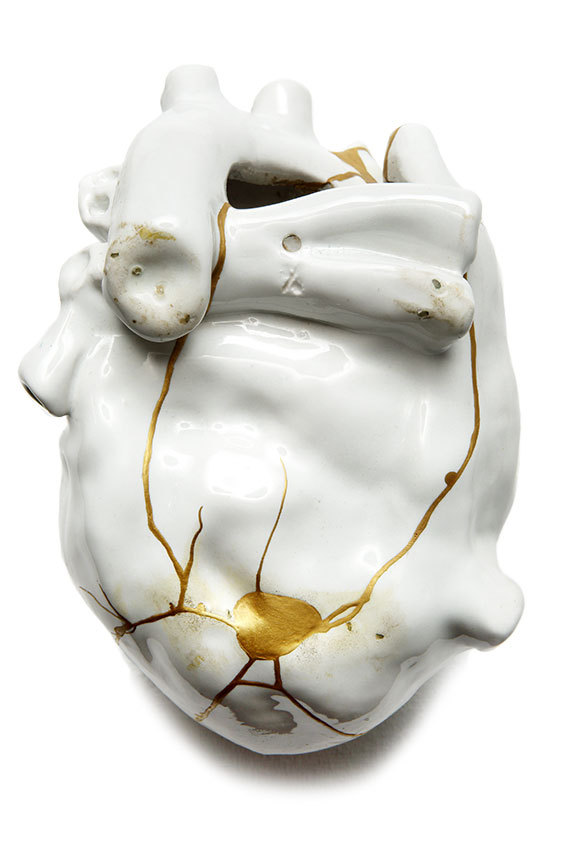
There is a beautiful Japanese art form called kintsugi. The artist takes broken ceramics and puts them back together by filling the cracks and places where they broke with gold, turning the art into something even more strikingly marvelous.

kintsugi
Kintsugi art

When Jesus comes to fill in the cracks in our desert hearts, He does the same thing. He redeems our scars, wounds, and dry places by giving us the gift of His whole self and making our scars dazzle with His love.

Let Him fill you today, brothers and sisters.

Hope in the Darkness

And out of gloom and darkness,
the eyes of the blind shall see.
โ€”Isaiah 29:18

Throughout this season of Advent, amid the cold and lingering darkness, we seek out light. We surround ourselves with flickering lights that gleam amidst the night, reminders of hope and beauty even in the darkest places. These lights help prepare our hearts to appreciate with awe and wonder the Light that was born out of darkness, in Bethlehem so long ago.

In todayโ€™s Gospel, Jesus heals two blind men who dared to believe that His powerful Light could permeate their deep, unending darkness. Even though they could not see Jesus, they knew that He was the Lord, for even when we cannot see the sunlight we can feel its rays upon us. They could sense, in Jesusโ€™s presence, a sacredness that drew them in, so much so that they truly believed that He could heal them. By their faith in the impossible, their sight was restored.

Only with the light of faith can we see the world around us clearly. Without a sense of hope in God, we cannot understand our true purpose. Tomorrow we celebrate the Feast of the Immaculate Conception, when Mary was conceived without original sin. Out of the darkness of Eve came the luminous beauty of Mary, whose fiat made way for our redemption. Do we believe that God can open our eyes to see hope within the darkness? Do we trust that the Light will prevail, even when it seems hidden to us?

As the days grow shorter and shorter this Advent, may the candlelight enkindle within our hearts a hope that endures through the darkness.

Cluttered Hearts

โ€œO house of Jacob, come,
let us walk in the light of the LORD!โ€ -Isaiah 2:5

Advent is upon us, and it seems like each year my heart cries out with more and more longing for the coming of our Savior.

Jesus, we need You.

We need You in our broken and hurting world full of darkness, sin, and deep, deep pain.

We need You to be the center of our families, our marriages, our friendships. We need You to heal our relationships with others.

We need You in our workplaces.

We need You in our bleeding Church; oh how we need You to make all things new and right. We need You to bind up our wounds, to bring mighty justice, to shine Your piercing light into the darkness of the appalling sin, shame, hiding, and cover-up, to direct our next steps and to guide us forward.

We need You in the messy parts of our hearts, the parts we are too ashamed to tell other people about, the parts You see and love us anyway.

We need You to uproot and cast out shame, fear, and distrust of Your goodness from our lives.

We need You in every inch of the world, in every part of our beings, in the deepest depths of our souls. Every minute, every hour, every secondโ€”we need You.

Dear brothers and sisters, Advent is a season full of hopeful expectation of Godโ€™s saving power. Itโ€™s a season of light shining forth in the darkness. As we light each new candle of the Advent wreath, may we allow that much more of the light of Christ to pierce our hearts and renew us.

The other day in prayer, I imagined Jesus knocking on the door of the home of my heart, like a guest that comes forty-five minutes before the party when youโ€™re still cleaning and havenโ€™t showered. I imagined myself panic-stricken, trying to shove certain things behind the couch. And there He stood before me, smiling, seeing right through my couch cushions to all the mess and sin that I tried to hide. Yet He responded with nothing but tenderness. His kindness leads to our conversion.

We need to let Jesus in before we feel ready. Sometimes we need Him to help point out where we need to grow, and sometimes we need the affirmation of knowing that He loves us just the same no matter what mess we have in our hearts. He takes us as we are. When we let our Savior in, prepared or not, He speaks to our cluttered and weary hearts, โ€œYou are good. You are seen. You are known. I love you fully, as you are.โ€

Unceasingly

โ€œAs Jesus approached Jericho
a blind man was sitting by the roadside begging,
and hearing a crowd going by, he inquired what was happening.
They told him,
“Jesus of Nazareth is passing by.”
He shouted, “Jesus, Son of David, have pity on me!”
The people walking in front rebuked him,
telling him to be silent,
but he kept calling out all the more,
“Son of David, have pity on me!”
Then Jesus stopped and ordered that he be brought to him;
and when he came near, Jesus asked him,
“What do you want me to do for you?”
He replied, “Lord, please let me see.”
Jesus told him, “Have sight; your faith has saved you.”
He immediately received his sight
and followed him, giving glory to God.
When they saw this, all the people gave praise to God.โ€ (Luke 18:35-43)

Dear friends, I cannot tell you the number of times my prayers for certain intentions have dwindled over time because theyโ€™ve gone seemingly unanswered. I get disheartened, listen to that tiny voice of despair telling me to doubt Godโ€™s faithfulness, and donโ€™t pray about it as muchโ€”and not out of surrender, but out of fear, out of feeling unworthy.

Mea culpa. Jesus, Son of David, have pity on me.

The blind man in todayโ€™s Gospel was persistent in his cry for Jesus. He, a beggar, an outcast and someone seen as less-than, didnโ€™t doubt that Jesus would hear and answer him because of who he was. Even when the crowd told him to be silent, they couldnโ€™t stifle the outcry of his prayer.

When people tell us to give up, when the world screams that God isnโ€™t good, we cannot cease our prayer. When we pray steadfastly, we allow the steadfast love of God to enter our hearts. We renew our trust in Him each time we cry out to Him. We proclaim how much we need a Savior.

In acknowledging Jesus as the โ€œSon of David,โ€ the blind man is declaring that Jesus Christ is Lord, that as the Son of David, He is the Messiah. This shows his great faith in who Jesus is.

Even though the man couldnโ€™t see Jesus and the miracles He was working before his sight was restored, he had faith. He believed that Jesus is the Savior. When we canโ€™t see what God is up to or when our prayers seem ignored, we can have faith that Jesus hasnโ€™t left the picture. He never abandons us, and He always hears and answers our prayers.

One of my favorite worship songs, โ€œThe King of My Heart,โ€ has a line that says, โ€œYouโ€™re never going to let me down.โ€ Has God ever let us down? Even in the darkest moments, no. Will God ever let us down? No, we can trust in His unending love. We can pray unceasingly, knowing that God is with us, fulfilling our every need.