Holy Innocents

When the magi had departed, behold,
the angel of the Lord appeared to Joseph in a dream and said,
“Rise, take the child and his mother, flee to Egypt,
and stay there until I tell you.
Herod is going to search for the child to destroy him.”
Joseph rose and took the child and his mother by night
and departed for Egypt.
He stayed there until the death of Herod,
that what the Lord had said through the prophet might be fulfilled,
Out of Egypt I called my son.

When Herod realized that he had been deceived by the magi,
he became furious.
He ordered the massacre of all the boys in Bethlehem and its vicinity
two years old and under,
in accordance with the time he had ascertained from the magi.
Then was fulfilled what had been said through Jeremiah the prophet:

A voice was heard in Ramah,
sobbing and loud lamentation;
Rachel weeping for her children,
and she would not be consoled,
since they were no more.

—Matthew 2:13–18

As Joseph and Mary anticipated Jesus’s arrival, surely they had some idea that they should expect the unexpected when it came to parenting the Son of God. After all, they had already received one giant surprise and had chosen to trust in God’s plan. Still, I don’t think they could have guessed this next curveball in their journey. After traveling to Bethlehem and delivering the child Jesus in a stable, Mary and Joseph were now asked to leave behind everything and everyone they knew, fleeing the country to protect their newborn son from being hunted by King Herod.

It is a testament to his unshakeable trust in God that Joseph responded to the angel’s warning without hesitation, picking up and leaving for Egypt immediately. After all, it was a big sacrifice to make for a message that had arrived in a dream. How did he know that this was truly God’s will for him and not some crazy manifestation of his own subconscious? Only by being so familiar with God’s voice through daily prayer was Joseph able to discern with clarity that this was a message he should heed. And he did so without wringing his hands wondering where they would stay, how they would get by in a foreign land, and why such senseless bloodshed must ensue at the hands of Herod. He dropped everything, including his own plans, to follow God’s call.

God gives grace for the situation, not for the imagination. The only way that Joseph and Mary were able to follow God so resolutely was by continually seeking His will in the present moment. They didn’t become distracted by worries and plans for the future; surely they had hopes and fears of what might lay ahead, but they placed it all in God’s hands and trusted that He would direct their steps.

Herod, on the other hand, was driven entirely by his own wild fears and self-serving plans. Filled with fear and insecurity upon hearing of the birth of this newborn king, he lashed out with merciless brutality and ordered the massacre of innocent children. But even this act of violence did not achieve its intended end, for the Holy Family had already escaped into Egypt.

Herod’s inflated ego numbed his conscience and skewed his perception of justice; he was willing to sacrifice whatever was necessary to preserve his own power, even innocent lives. Herod grasped for control when he perceived a threat to his power, but God was always in control of the situation. The newborn king would die at the appointed time and place, not through Herod’s feverish display of power and cruelty.

We are not in control, and that is a marvelous thing. Let us embrace the unknown path that lies ahead, knowing that we have a good and loving God who will lead us every step of the way. When unexpected situations arrive, may we trust that God will provide us the grace we need in the moment. And may we always be willing to speak up for the innocent and vulnerable, who are so often trampled upon and exploited by those in power.

Hierophanies

Back in my undergraduate career, I took a fascinating class on Religious Studies. Coming from a small-ish town in Minnesota, I had a yearning to hear about the world and how people lived; my upbringing was about as homogeneous as it gets (unless you count the occasional interdenominational Christian marriage as “diversity”), so I wanted to soak it all in; I ended up majoring in Global Studies and Spanish, after all.

After I had knocked out my homework for my required classes, it was almost something of a treat to dive into the study of spirituality and find common threads and distinguishing characteristics of various religious experiences around the world.

Surprising (or possibly, unsurprisingly, if you’re familiar with the academic world), this class came with a dense vocabulary book; terms invented or repurposed to define the through lines between different expressions of spirituality. Until today, one term in particular has stuck in a way that others haven’t: Hierophany.

A hierophany, simply put, is a bursting through of the divine or the spiritual into humanity. It is a melding of the “sacred” with the “profane,” or at least an interaction between the two. Some traditions are rife with them; it is not at all uncommon for some peoples’ gods to manifest in regular, frequent ways.

Now in Advent, I’m drawn to reflect on this theme within my own beliefs: What constitutes a hierophany in Catholicism? Where does God burst through into our very human existence? How does Jesus Christ meet us?

In some ways, I would almost argue that the term doesn’t even apply; if you believe that God is ever-present, is he really ever breaking through any kind of divide between the “sacred” and “profane”? If the God-Man came to Earth as a human infant, can anything human truly be called profane?

But let’s flip the script. Can anything be more accurately described as a bursting through of the divine than the incarnation? What about the Eucharist? While it’s true that God is always with us, that His Spirit dwells within us, we also profess a unique faith in the Sacraments. The Sacraments reflect God’s understanding of the very human desire for a tangible, material experience of the divine.

Sisters and brothers, GOD CARES FOR US. Even the imperfect parts of us that cannot believe without seeing! He gives us real matter, things that we perceive with our five senses. St. Thomas Aquinas is famous for his view that our physical perception of the world around us was an essential to experience and learn more about God.

If this is true, how good it is that God gave us His Son, who became man! How wonderful it is that Jesus gave us the Sacraments!

Last week, I discussed the “Three Advents”: The birth of Jesus Christ, his Second Coming, and Christ coming into our lives every day. The first two move us greatly. What inspires greater celebration than Christmas? And what inspires greater fear and awe than the Second Coming?

But how deeply are we affect by the Third Advent, where Jesus Christ bursts forth into our lives every day. He is present in Spirit, in Scripture, and in the Sacraments. Let us rest in His Spirit, soak in the Scripture, and avail ourselves of the Sacraments. As we reflect on his birth during the Advent season, may we also reflect on the ways he visits us every day.

Cluttered Hearts

“O house of Jacob, come,
let us walk in the light of the LORD!” -Isaiah 2:5

Advent is upon us, and it seems like each year my heart cries out with more and more longing for the coming of our Savior.

Jesus, we need You.

We need You in our broken and hurting world full of darkness, sin, and deep, deep pain.

We need You to be the center of our families, our marriages, our friendships. We need You to heal our relationships with others.

We need You in our workplaces.

We need You in our bleeding Church; oh how we need You to make all things new and right. We need You to bind up our wounds, to bring mighty justice, to shine Your piercing light into the darkness of the appalling sin, shame, hiding, and cover-up, to direct our next steps and to guide us forward.

We need You in the messy parts of our hearts, the parts we are too ashamed to tell other people about, the parts You see and love us anyway.

We need You to uproot and cast out shame, fear, and distrust of Your goodness from our lives.

We need You in every inch of the world, in every part of our beings, in the deepest depths of our souls. Every minute, every hour, every second—we need You.

Dear brothers and sisters, Advent is a season full of hopeful expectation of God’s saving power. It’s a season of light shining forth in the darkness. As we light each new candle of the Advent wreath, may we allow that much more of the light of Christ to pierce our hearts and renew us.

The other day in prayer, I imagined Jesus knocking on the door of the home of my heart, like a guest that comes forty-five minutes before the party when you’re still cleaning and haven’t showered. I imagined myself panic-stricken, trying to shove certain things behind the couch. And there He stood before me, smiling, seeing right through my couch cushions to all the mess and sin that I tried to hide. Yet He responded with nothing but tenderness. His kindness leads to our conversion.

We need to let Jesus in before we feel ready. Sometimes we need Him to help point out where we need to grow, and sometimes we need the affirmation of knowing that He loves us just the same no matter what mess we have in our hearts. He takes us as we are. When we let our Savior in, prepared or not, He speaks to our cluttered and weary hearts, “You are good. You are seen. You are known. I love you fully, as you are.”

At Midnight, in Bethlehem, in Piercing Cold

Today begins the St. Andrew Christmas Novena, also called the Christmas Anticipation Prayer. I first heard about this tradition a few years ago, and it’s a really beautiful prayer:

Hail and blessed be the hour and moment in which the Son of God was born of the most pure Virgin Mary, at midnight, in Bethlehem, in the piercing cold. In that hour, vouchsafe, O my God! to hear my prayer and grant my desires, through the merits of our Savior Jesus Christ, and of His Blessed Mother. Amen.

Traditionally, this prayer is recited fifteen times a day, beginning on November 30, the Feast of St. Andrew, and finishing on Christmas Eve. It is a meditative prayer, helping us to place ourselves in Bethlehem and focus on the coming of the Christ child as we prepare for Christmas. Praying with this novena has given me a richer awareness of God throughout the Advent and Christmas seasons. It helps me to connect my own present experiences and petitions with the miracle of the incarnation.

Last year, I created a lock screen for my phone with the novena prayer written on it, so that throughout the day, whenever I checked my phone, I would see the novena and be reminded to pray it. I’ll share it with you here, in case any of you need the same reminder!

IMG_0151.JPG

Wishing you all a blessed Advent!

Christ the Victor

Today, I’m cheating by skipping ahead a few chapters in Revelation. I’m not sorry.

Get a load of this:

The King of Kings.

11 Then I saw the heavens opened, and there was a white horse; its rider was [called] “Faithful and True.” He judges and wages war in righteousness. 12 His eyes were [like] a fiery flame, and on his head were many diadems. He had a name inscribed that no one knows except himself. 1He wore a cloak that had been dipped in blood, and his name was called the Word of God. 14 The armies of heaven followed him, mounted on white horses and wearing clean white linen. 15 Out of his mouth came a sharp sword to strike the nations. He will rule them with an iron rod, and he himself will tread out in the wine press the wine of the fury and wrath of God the almighty. 1He has a name written on his cloak and on his thigh, “King of kings and Lord of lords.”

How does that compare with your image of Jesus? Maybe it’s better stated: How does that compare with your baseline image of Jesus? When you pray to Jesus, or proclaim his Gospel, are you thinking of a Jesus with fiery eyes, many crowns, a bloody cloak, and “King of kings and Lord of lords” tattooed on his thigh?

How do our different images of Jesus color the way we see the Christian life? When we emphasize suffering Jesus, are we more likely to expect or see suffering? When we think of Jesus’ gentleness with children and the downtrodden, I would bet we’re more inclined to think the Christian life is about service and self-gift. Does hearing about Jesus’ miracles make us more likely to pray for one in our own lives?

All of these senses logically follow from the subject matter. There are so many facets to Jesus (he is, well Son of the Creator) and consequently to our spiritual lives, since we are called to be imitators of Christ.

But how often do we reflect on that King of kings dimension of Jesus Christ?

I know that my prayer, confidence in evangelization, and desire to be bold all grow when I reflect on the above passage. Today’s readings (see, I still talked about them!) are all proclamations of God’s victory and faithfulness, and they provided just the right jolt of inspiration and hope for me during my early college years, where self-image and doubt were immense struggles. Jesus, in His powerful, victorious glory, became somebody I could aspire to be like and be happy to serve, and be proud of myself.

Does your faith make you proud of yourself? Does it give you self-confidence? It sounds silly to say, but I’ll say it anyway because it sometimes gets easy to believe this: Christ-like humility and a strong sense of self-worth are not mutually exclusive! In fact, a healthy self-image is crucial to a fully integrated life of faith! Where our imperfections and failures once may have crippled us, our worth comes from God and cannot be shaken.

We are called to be heirs to this glorious Kingdom and serve the all-powerful God who rules in victory over Satan and evil. That’s it. That’s the end of the story. Jesus Christ, the victory, riding in on a white stallion and laying waste to all that is not of God. I’m guessing that’s not your usual “prayer material”.

Take some time to reflect on Jesus Christ in His glorious victory today. I pray you let it mold how you view yourself and how you go about living out your faith.

¡Viva Cristo Rey! (Part 2)

Yesterday, we celebrated one of my favorite feast days, the Solemnity of our Lord Jesus Christ, King of the Universe. Why is it one of my favorite feast days, you may ask? Not just because “Crown Him with Many Crowns” is my jam (really, though, it’s a fantastic hymn). I love this day so much because it is a day to celebrate the powerful truth that Jesus is Lord and I am not.

Praise God for that gift. As the liturgical year wraps up this week, I declare that truth with a sigh of relief in my lungs and with praise and gratitude in my heart—Jesus Christ is King. King over all my problems, King over our hurting Church, King over every situation in this past year that has made no sense, King over all the violence in the world and the turmoil in my heart, King over the days where I feel like I can’t do it, King over every. single. thing.

We praise You, Lord Jesus.

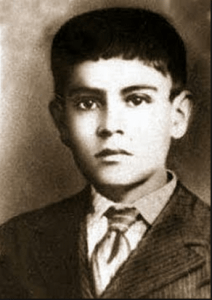
Saint_Jose_Luis_Sanchez_del_Rio
St. José Sánchez del Río

He is sovereign over all. We get to choose to surrender our control and let Him be King, no matter what the cost. A great Saint did this at just 14 years old, St. José Sánchez del Río. He lived in Mexico during the Cristiada movement of the 1920s, when a bloody war was waged against Catholics. The Church was under total control of the state, and it became illegal for Catholics to practice their faith in public. Monasteries and convents were shut down, Church property was taken over, and priests were arrested and killed for saying Mass. The Cristeros rose up to fight for Christ their King, and St. José asked his parents to join their army. He said, “For Jesus Christ, I will do everything.” He was their youngest member and became their flag bearer. St. José was imprisoned after giving his horse to the General and not being able to escape in time. While in prison, he refused to renounce his faith and could be heard frequently saying, “Viva Cristo Rey! Viva La Virgen de Guadalupe!”

St. José’s godfather was the mayor of his town, but he did not let him go. He told him if he just said, “Death to Christ the King,” he would let José go home to his family. But he refused, so he was ordered to be killed. The federalists cut off the soles of his feet with a knife and then made St. José walk ten blocks along a dusty, gravel road to his grave. The soldiers beat him and mocked him, and he just kept shouting, “Viva Cristo Rey!” They then stabbed him several times. They asked him what they should tell his father, and St. José replied, “That we will see each other in Heaven! Viva Cristo Rey! Viva La Virgen de Guadalupe!” With that, the soldiers shot him, and he died.

Jesus was St. José’s King, and he let Christ reign over every area of his life, even when it meant dying a death much like our Lord’s. Is Christ King over every part of your life, or is there anything else that reigns? The ultimate expression of our trust in God is when we have childlike dependency on our Savior and King. As the liturgical year comes to a close and we prepare for the coming of our Savior, where do you need Christ to be your King?

Viva Cristo Rey! Long live Christ the King!

P.S. A great movie on the life of St. José Sánchez del Río is For Greater Glory. Here’s a powerful clip!

¡Viva Cristo Rey!

Miguel_Pro's_execution_(1927)This weekend we will celebrate Christ the King Sunday, and today we honor the feast of Blessed Miguel Pro, who is known for his last words, uttered before a firing squad: “¡Viva Cristo Rey!” (“Long live Christ the King!”). As we reflect on Christ’s role as king within our own lives, Miguel Pro is an example to us of how we are to orient our hearts toward Christ above all else.

Miguel Pro lived in Mexico during a time of intense religious persecution. The secular government forbade all public worship, and as a Jesuit priest, Father Pro had to carry out his mission in secret. Disguised as a mechanic, an office worker, or a beggar, he administered the sacraments and served the poor. He was well aware of the dangers and knew that this mission would likely cost him his life, but he also understood that following Christ was what gave his life meaning in the first place. If it meant defying an unjust government, he would not hesitate; he would gladly lay down his life for the sake of Christ, who had died on the Cross for him.

In 1927, Father Pro was falsely convicted of an assassination attempt against President Calles and executed without trial. Intending to portray Pro as a coward, Calles sent a photographer to the execution. But this backfired, for the photo portrayed Father Pro as the saint he truly was: standing bravely with arms outstretched, embracing his cross and declaring Christ his king. The photo of his last moments, printed on the front page of newspapers throughout Mexico, galvanized the Cristeros, who were fighting against government persecution. His martyrdom was a powerful witness for Christ.

When our society contradicts the teachings of Christ, are we prepared to stand for what is right? Or are we ruled more by the common beliefs of the culture than by Christ Himself? Unlike Miguel Pro, we do not have to fear a firing squad for practicing our faith, but sometimes much lesser penalties—fear of being misunderstood, ignored, or ostracized—scare us away from allowing Christ to rule in every aspect of our lives. Let us pray to Blessed Miguel Pro to grant us his courage, that we may not allow the fear of how others may treat us to cloud our focus on Christ the King.


Image: Photograph of Miguel Agustin Pro, Mexican Jesuit, being executed by a firing squad in Mexico city, November 23, 1927 / PD-US

Because We Need Faith

Dear fellow pilgrims,

Today in Mass, I continued to ponder the answer to the Lord’s assertion that “it is better for you that I go” amidst a day of celebrating my completed PhD at NYU in Developmental Psychology (AMDG—all glory to God, y’all). I had never thought of the answer within a view of my own discipline…thinking about us as children, and having the disciples, the Church, needing to learn what it’s like to not always have Jesus, their ultimate caregiver, around. After all, in the development of a child’s life, they eventually have to be able to function without the constant help of a caregiver as they get older and more responsibilities are given to them.

In other words, it’s easier to have faith in Jesus when He is in front of you doing miracles and you are physically encountering Him than it is when you are believing without seeing. (But, just for the record, even believing when He was on earth was still a challenge!) And what is Jesus constantly about in our lives? Seeing that we grow further and further into deeper trust and faith in Him. While Jesus was on earth, He subjected himself to being in one place at one time, and in a way, gave up the ability to be present to everyone everywhere in the same way that He can be now, post-Ascension and post-Pentecost.

He left us because you can’t have a deep faith without embracing a space of unknowing. Thomas rejected that space, demanded concrete evidence, and even though our Lord was gracious to meet him where he was, He also acknowledged the superiority of “believing without seeing” over believing because you saw.

Thinking about this dynamic more, I realized that the way I typically have thought of the Ascension (i.e. Jesus itching to ascend and FINALLY get back home, just waving bye-bye to the disciples as they all stare as He ascends slooooowly up towards the clouds) might not have been so one-sided on the angst part. Being a parent and learning to let go is HARD (and my kid is only 15 months old!), so it occurred to me today that Jesus was probably not so unaffected by the disciples pleading. The tone of “it is better for you that I go,” is one straight from a loving Father’s mouth, trying to show that He is doing something that upsets his children only because it is ultimately for their good they could not find from following another way. Saying goodbye to His disciples was probably very challenging, even though He was also intensely joyful to return to Heaven!

The priest today at Mass recalled the words of some saints who have mentioned similar pleas to their loved ones on their deathbeds: It is better for me to intercede for you in Heaven than it is for me to be with you here. Getting to Heaven means joining with the Source of all life and love and holiness, and the Holy Spirit is like the electrical current that flows from that source (going with Grace’s power analogy from Tuesday). It’s like Jesus had to draw the circuit board of salvation history in order to reconnect humans to God, only He could pave the way or connections between Heaven and earth, and He could only truly connect Heaven to earth in the way originally intended in His mission if He returned to Heaven.

But…there is still the waiting after the Ascension. There is still this gap, an empty channel soon to be filled, but the disciples did not know exactly when the Holy Spirit would come! It has never occurred to me that the days after the Ascension were probably filled with similar angst among the disciples as were the days post-crucifixion. “Ok…so He told us to wait in Jerusalem…but not for how long…and what exactly did He say would come to us, again?”. The Lord has left them “for good,” or so it seems like, and they have directions to follow but are uncertain as to the specifics of expectations.

I invite us all to put ourselves in the disciples’ shoes after the Ascension—what would you do if you were in their place? How would you feel after you lost sight of Jesus arising farther and farther into the sky…when He turned from a speck in the air to unable to be seen…maybe it was a foggy day and they lost sight quickly…insert yourself into the scene, and reread passages from different Gospels, praying through instincts that arise when you dig deep into what it would be like to be there. Take note of your responses and what it says about how you could pray for deepening your faith.

Pax Christi,
Alyssa

The Reckless Gift, the Reckless Giver

From today’s first reading:

“… Peter and the Apostles said in reply,
“We must obey God rather than men.
The God of our ancestors raised Jesus,
though you had him killed by hanging him on a tree.
God exalted him at his right hand as leader and savior
to grant Israel repentance and forgiveness of sins.
We are witnesses of these things,
as is the Holy Spirit whom God has given to those who obey him.”

From today’s Gospel:

“…the one who comes from heaven is above all.
He testifies to what he has seen and heard,
but no one accepts his testimony.
Whoever does accept his testimony certifies that God is trustworthy.
For the one whom God sent speaks the words of God.
He does not ration his gift of the Spirit.”

Dear fellow pilgrims,

As I’m meditating about today’s readings, I see a common thread of the Holy Spirit through the first reading and the gospel reading. In the first reading, the Holy Spirit is described as both a “witness” to Christ’s death and resurrection and a gift from God granted to those who are obedient to Him. In the gospel reading, the Holy Spirit is described as a gift that never runs out, a gift that is always given out of abundance, a gift that is never given from a miserly, calculating heart. I think the Holy Spirit is the least understood member of the Trinity, and I think that is in part because he is the least embodied; we have an idea of the personhood of the Father, the Son, but who really is the Holy Spirit? I had to refresh myself on some theology out of the Catechism:

745 The Son of God was consecrated as Christ (Messiah) by the anointing of the Holy Spirit at his Incarnation (cf. Ps 2:6-7).

746 By his Death and his Resurrection, Jesus is constituted in glory as Lord and Christ (cf. Acts 2:36). From his fullness, he poured out the Holy Spirit on the apostles and the Church.

747 The Holy Spirit, whom Christ the head pours out on his members, builds, animates, and sanctifies the Church. She is the sacrament of the Holy Trinity’s communion with men.

There is something new about the Holy Spirit that was revealed to me as I read more…. the inseparability between the Holy Spirit and Christ, likened to how the oil of anointing seeps into the skin of the anointed. Christ and the Holy Spirit are inseparable, and each informs the other’s identity: the Anointed and the anointing cannot be so without the other. And this anointing is the divine nature of Christ given by the Father to be enmeshed with Mary’s immaculate DNA to create the Incarnate God, Jesus. This is the reckless love of God, to be united with His creation in such a way.

But the Incarnation was not the whole mission of Jesus, it was the qualifying state of His Being that enabled the larger mission of unleashing the deepest possible union between humans and their God through being the type of son that humans could never be: completely obedient, because Jesus submitted Himself to death completely to serve the will of the Father.

Jesus did not want to die. And yet, He did, and did so completely out of love for us because He trusted the Father’s love for us and for Him. Only because of His humanity did He know that His mission of obedience was inseparable from ours, and only because of His divine anointing and union with the Holy Spirit did He know that His mission of atonement was inseparable from the Father’s. And somehow, through the culmination of these inseparable missions in His passion, death, resurrection, and ascension into Heaven, an overflowing channel of the Holy Spirit was released into the hearts of obedient believers following after Him.

The barrier between Man and God was broken by Christ’s broken Body and became the chasm through which the Holy Spirit can now be embodied by non-divine people like us. Within this new relationship between God and Man, the Holy Spirit has one mission: to continue the Incarnation within us. And this gift is recklessly given, it is not rationed or divided because God’s love is never proportioned to what we deserve, God’s love mirrors the infinite mercy of the Giver. But this Spirit cannot be given to those who do not believe in Christ because of the inseparability of Christ and the Holy Spirit, and this is why obedience to Christ makes way for the movement of the Spirit: the Spirit cannot move through channels that have not conformed to Christ’s wounds.

Gracious God, You Who make all things new,
Create in us hearts of flesh,
Holding close to the beat of your Heart,
Which never ceases to live in pursuit of ours.

Good Jesus, may we learn from your perfect Sonship,
Your Sacred Heart, that did not deny the will of your Father’s.
Hide us in the wounds of your passion,
teach us the way of your glorious scars,
And bring us closer to your perfect obedience here within time
So that we may not have to wait any longer for eternity when You come. 

Pax Christi,
Alyssa