Advent and the Dark Night of the Soul

Today’s saint, St. John of the Cross, is known for his writings on the “dark night of the soul.” He was a man of prayer who was intimately close to God; however, he suffered a great deal throughout his life as he attempted to reform the Carmelite order. St. John, along with St. Teresa of Avila, sought to cultivate a way of life that fostered a greater closeness with God through prayer and sacrifice. They faced strong opposition, however, from those who did not want the Carmelites to change their ways. John was immersed in the experience of the Cross, facing imprisonment, unjust accusations, persecution, and abuse. For seeking to grow in holiness, he was treated like a criminal.

But John’s greatest legacy is not his initial zeal to reform the Carmelite order; rather, it is how he responded when his holy passion was met with censure and condemnation. He turned to poetry and prayer as a means of expressing the great sorrow he felt, and he began to reflect on how he could grow ever closer to Jesus through this experience of suffering. Faced with the bitter reality that even our purest, most faithful actions can be met with cruelty and indifference, and that bad things do, in fact, happen to good people, John refused to believe that God was not present in that darkness. He wrote of his experiences undergoing this dark night of the soul and how the light that dawned on the other end was brighter than anything he had experienced. By passing through the darkness, he came to know a more brilliant Light; by “dying to self,” he rose to new life. John assures us that while the spiritual life will bring suffering and pain, the dark night is not the end. It is preparing us for a greater glory to come.

How do we cultivate a real, lasting joy instead of the fleeting happiness that comes and goes with our ever-changing circumstances? Even when God is hidden to us—even, in fact, when we pass through a dark night of the soul—joy is ours for the taking. We struggle, of course, to have joy in times when we do not feel happy; but true joy is deeper than mere happiness. So what is this mysterious, profound joy that can transcend our outward emotions? It comes from God alone.

The saints exuded joy in every moment of their lives—even amidst intense suffering and grief. God wants us to have this unshakeable joy, too, to be sustained by His promises at every moment, come what may. When we are taken with the joy only God can provide, we know beyond any question that we are known and loved and deeply cherished by a Love that knows no bounds. He wants to sustain our flagging spirits with that boundless joy.

We cannot control our circumstances, but if we are deeply rooted in God’s Word and continue to remind ourselves of His promises, we will have a hope that endures beyond our earthly trials. The joy that remains will cause us to remain convinced of God’s presence and goodness, even as we walk through the deserts of life.

This weekend, we will light the rose-colored candle on our Advent wreaths as we celebrate Gaudete Sunday. Most of Advent is a time of quiet preparation, putting everything in order as Christmas draws near, making our hearts ready to receive the Christ child. But this coming week we will focus on joyful anticipation of the birth of Christ. The child has not yet arrived, but we are joyful and confident in His coming; even though we are yet in darkness, we celebrate the promise of the Light. We walk in the midst of darkest night, yet we cannot contain our joy—for the light has already dawned in our hearts.

Without having seen him you love him; though you do not now see him you believe in him and rejoice with unutterable and exalted joy.
—1 Peter 1:8

Desert Places

“Streams will burst forth in the desert,
and rivers in the steppe.
The burning sands will become pools,
and the thirsty ground, springs of water.” -Isaiah 35:6-7

My brother lives in Arizona, where they are currently enjoying the chilly winter temperature of 72°. A couple years ago, I went to visit him in June, when it gets to be a lovely 115°. One morning, we decided to go hiking in the beautiful desert mountains. We got up really early to beat the heat—well, to try to beat the heat, anyway.

As we were hiking, I kept saying that it didn’t feel that hot, even though it was. This was probably because my body associates heat with the sweaty, sticky humidity of New York summers.

It wasn’t until we got back to the car after our hike that I realized how thirsty I was. My throat was really dry, and I was definitely dehydrated.

Has your heart ever felt this way? Sometimes we go about our lives, thinking everything is fine, that we’ve got it, that we’re in control, and then we realize how much we are desperately aching for our Savior.

Come, Lord Jesus, come.

Or has your heart ever felt like the vast Arizona desert? Dry, cracked, parched, barren. Sometimes in seasons of desolation, pain, or mourning, we can feel like we are stuck in an endless desert. I’ve definitely had those moments of wondering when the drought would end and God would bring a long-awaited reprieve.

Come, Lord Jesus, come.

Jesus meets us in our desert places. He knows those seasons well. If you are feeling like you’re in a desert season right now, take heart. He is with you. And no matter how painful, lonely, or never-ending it seems, Jesus is bigger. And He is on the way.

There is a beautiful Japanese art form called kintsugi. The artist takes broken ceramics and puts them back together by filling the cracks and places where they broke with gold, turning the art into something even more strikingly marvelous.

kintsugi
Kintsugi art

When Jesus comes to fill in the cracks in our desert hearts, He does the same thing. He redeems our scars, wounds, and dry places by giving us the gift of His whole self and making our scars dazzle with His love.

Let Him fill you today, brothers and sisters.

Hope in the Darkness

And out of gloom and darkness,
the eyes of the blind shall see.
—Isaiah 29:18

Throughout this season of Advent, amid the cold and lingering darkness, we seek out light. We surround ourselves with flickering lights that gleam amidst the night, reminders of hope and beauty even in the darkest places. These lights help prepare our hearts to appreciate with awe and wonder the Light that was born out of darkness, in Bethlehem so long ago.

In today’s Gospel, Jesus heals two blind men who dared to believe that His powerful Light could permeate their deep, unending darkness. Even though they could not see Jesus, they knew that He was the Lord, for even when we cannot see the sunlight we can feel its rays upon us. They could sense, in Jesus’s presence, a sacredness that drew them in, so much so that they truly believed that He could heal them. By their faith in the impossible, their sight was restored.

Only with the light of faith can we see the world around us clearly. Without a sense of hope in God, we cannot understand our true purpose. Tomorrow we celebrate the Feast of the Immaculate Conception, when Mary was conceived without original sin. Out of the darkness of Eve came the luminous beauty of Mary, whose fiat made way for our redemption. Do we believe that God can open our eyes to see hope within the darkness? Do we trust that the Light will prevail, even when it seems hidden to us?

As the days grow shorter and shorter this Advent, may the candlelight enkindle within our hearts a hope that endures through the darkness.

Cluttered Hearts

“O house of Jacob, come,
let us walk in the light of the LORD!” -Isaiah 2:5

Advent is upon us, and it seems like each year my heart cries out with more and more longing for the coming of our Savior.

Jesus, we need You.

We need You in our broken and hurting world full of darkness, sin, and deep, deep pain.

We need You to be the center of our families, our marriages, our friendships. We need You to heal our relationships with others.

We need You in our workplaces.

We need You in our bleeding Church; oh how we need You to make all things new and right. We need You to bind up our wounds, to bring mighty justice, to shine Your piercing light into the darkness of the appalling sin, shame, hiding, and cover-up, to direct our next steps and to guide us forward.

We need You in the messy parts of our hearts, the parts we are too ashamed to tell other people about, the parts You see and love us anyway.

We need You to uproot and cast out shame, fear, and distrust of Your goodness from our lives.

We need You in every inch of the world, in every part of our beings, in the deepest depths of our souls. Every minute, every hour, every second—we need You.

Dear brothers and sisters, Advent is a season full of hopeful expectation of God’s saving power. It’s a season of light shining forth in the darkness. As we light each new candle of the Advent wreath, may we allow that much more of the light of Christ to pierce our hearts and renew us.

The other day in prayer, I imagined Jesus knocking on the door of the home of my heart, like a guest that comes forty-five minutes before the party when you’re still cleaning and haven’t showered. I imagined myself panic-stricken, trying to shove certain things behind the couch. And there He stood before me, smiling, seeing right through my couch cushions to all the mess and sin that I tried to hide. Yet He responded with nothing but tenderness. His kindness leads to our conversion.

We need to let Jesus in before we feel ready. Sometimes we need Him to help point out where we need to grow, and sometimes we need the affirmation of knowing that He loves us just the same no matter what mess we have in our hearts. He takes us as we are. When we let our Savior in, prepared or not, He speaks to our cluttered and weary hearts, “You are good. You are seen. You are known. I love you fully, as you are.”

¡Viva Cristo Rey! (Part 2)

Yesterday, we celebrated one of my favorite feast days, the Solemnity of our Lord Jesus Christ, King of the Universe. Why is it one of my favorite feast days, you may ask? Not just because “Crown Him with Many Crowns” is my jam (really, though, it’s a fantastic hymn). I love this day so much because it is a day to celebrate the powerful truth that Jesus is Lord and I am not.

Praise God for that gift. As the liturgical year wraps up this week, I declare that truth with a sigh of relief in my lungs and with praise and gratitude in my heart—Jesus Christ is King. King over all my problems, King over our hurting Church, King over every situation in this past year that has made no sense, King over all the violence in the world and the turmoil in my heart, King over the days where I feel like I can’t do it, King over every. single. thing.

We praise You, Lord Jesus.

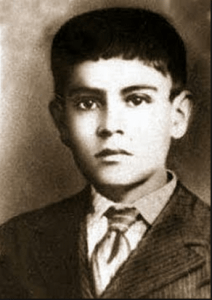
Saint_Jose_Luis_Sanchez_del_Rio
St. José Sánchez del Río

He is sovereign over all. We get to choose to surrender our control and let Him be King, no matter what the cost. A great Saint did this at just 14 years old, St. José Sánchez del Río. He lived in Mexico during the Cristiada movement of the 1920s, when a bloody war was waged against Catholics. The Church was under total control of the state, and it became illegal for Catholics to practice their faith in public. Monasteries and convents were shut down, Church property was taken over, and priests were arrested and killed for saying Mass. The Cristeros rose up to fight for Christ their King, and St. José asked his parents to join their army. He said, “For Jesus Christ, I will do everything.” He was their youngest member and became their flag bearer. St. José was imprisoned after giving his horse to the General and not being able to escape in time. While in prison, he refused to renounce his faith and could be heard frequently saying, “Viva Cristo Rey! Viva La Virgen de Guadalupe!”

St. José’s godfather was the mayor of his town, but he did not let him go. He told him if he just said, “Death to Christ the King,” he would let José go home to his family. But he refused, so he was ordered to be killed. The federalists cut off the soles of his feet with a knife and then made St. José walk ten blocks along a dusty, gravel road to his grave. The soldiers beat him and mocked him, and he just kept shouting, “Viva Cristo Rey!” They then stabbed him several times. They asked him what they should tell his father, and St. José replied, “That we will see each other in Heaven! Viva Cristo Rey! Viva La Virgen de Guadalupe!” With that, the soldiers shot him, and he died.

Jesus was St. José’s King, and he let Christ reign over every area of his life, even when it meant dying a death much like our Lord’s. Is Christ King over every part of your life, or is there anything else that reigns? The ultimate expression of our trust in God is when we have childlike dependency on our Savior and King. As the liturgical year comes to a close and we prepare for the coming of our Savior, where do you need Christ to be your King?

Viva Cristo Rey! Long live Christ the King!

P.S. A great movie on the life of St. José Sánchez del Río is For Greater Glory. Here’s a powerful clip!

Unceasingly

“As Jesus approached Jericho
a blind man was sitting by the roadside begging,
and hearing a crowd going by, he inquired what was happening.
They told him,
“Jesus of Nazareth is passing by.”
He shouted, “Jesus, Son of David, have pity on me!”
The people walking in front rebuked him,
telling him to be silent,
but he kept calling out all the more,
“Son of David, have pity on me!”
Then Jesus stopped and ordered that he be brought to him;
and when he came near, Jesus asked him,
“What do you want me to do for you?”
He replied, “Lord, please let me see.”
Jesus told him, “Have sight; your faith has saved you.”
He immediately received his sight
and followed him, giving glory to God.
When they saw this, all the people gave praise to God.” (Luke 18:35-43)

Dear friends, I cannot tell you the number of times my prayers for certain intentions have dwindled over time because they’ve gone seemingly unanswered. I get disheartened, listen to that tiny voice of despair telling me to doubt God’s faithfulness, and don’t pray about it as much—and not out of surrender, but out of fear, out of feeling unworthy.

Mea culpa. Jesus, Son of David, have pity on me.

The blind man in today’s Gospel was persistent in his cry for Jesus. He, a beggar, an outcast and someone seen as less-than, didn’t doubt that Jesus would hear and answer him because of who he was. Even when the crowd told him to be silent, they couldn’t stifle the outcry of his prayer.

When people tell us to give up, when the world screams that God isn’t good, we cannot cease our prayer. When we pray steadfastly, we allow the steadfast love of God to enter our hearts. We renew our trust in Him each time we cry out to Him. We proclaim how much we need a Savior.

In acknowledging Jesus as the “Son of David,” the blind man is declaring that Jesus Christ is Lord, that as the Son of David, He is the Messiah. This shows his great faith in who Jesus is.

Even though the man couldn’t see Jesus and the miracles He was working before his sight was restored, he had faith. He believed that Jesus is the Savior. When we can’t see what God is up to or when our prayers seem ignored, we can have faith that Jesus hasn’t left the picture. He never abandons us, and He always hears and answers our prayers.

One of my favorite worship songs, “The King of My Heart,” has a line that says, “You’re never going to let me down.” Has God ever let us down? Even in the darkest moments, no. Will God ever let us down? No, we can trust in His unending love. We can pray unceasingly, knowing that God is with us, fulfilling our every need.

Everything Is Grace

In today’s Gospel reading, Jesus presents to us a startlingly bold exhortation:

Whoever seeks to preserve his life will lose it,
but whoever loses it will save it.
—Luke 17:33

This does not mean, of course, that we should be careless about our own lives. On the contrary; if our bodies are temples of the Holy Spirit, then we should treat all life—our own included—as sacred and worthy of protection. But in doing so we must remember that our lives have been entrusted to us by God; they are not our own. If we try to preserve them for our own sake, instead of for God’s, then our lives will become detached from the purpose imbued by their Creator and thus lose their meaning.

Jesus speaks here with a sense of urgency, warning us not to be caught unprepared at the judgment. The reading shakes us out of our complacency and gives us the sense that everything can change in an instant. If this is really true, then every moment carries great weight and meaning. Every second of our lives is an opportunity to be a conduit of the inexhaustible Source of all truth, beauty, and goodness in the world.

Jesus’s words are an invitation for us to stop wading in the shallows of our life and go out into the deep. He challenges us to let go of the worldly attachments that keep us tethered to the shore and to go forth in courage. All the beautiful things in this world only have meaning insofar as they reflect the beauty of the Creator. If we love God first and foremost, then we will see His beauty in everything around us. But if we cling to the things of this world for their own sake, forgetting that they are gifts from God, then we will ultimately be left unfulfilled.

May we deepen our awareness that everything is grace, that our very lives are given to us as invaluable, unmerited gifts.

There is the great spiritual principle that undergirds the entire Gospel: detachment. The heart of the spiritual life is to love God and then to love everything else for the sake of God. But we sinners, as St. Augustine said, fall into the trap of loving the creature and forgetting the Creator. That’s when we get off the rails.

We treat something less than God as God—and trouble ensues. And this is why Jesus tells his fair-weather fans that they have a very stark choice to make. Jesus must be loved first and last—and everything else in their lives has to find its meaning in relation to him.

—Bishop Robert Barron

Freedom in Forgiveness

“Jesus said to his disciples,
“Things that cause sin will inevitably occur,
but woe to the one through whom they occur.
It would be better for him if a millstone were put around his neck
and he be thrown into the sea
than for him to cause one of these little ones to sin.
Be on your guard!
If your brother sins, rebuke him;
and if he repents, forgive him.
And if he wrongs you seven times in one day
and returns to you seven times saying, ‘I am sorry,’
you should forgive him.”
And the Apostles said to the Lord, “Increase our faith.”
The Lord replied, “If you have faith the size of a mustard seed,
you would say to this mulberry tree,
‘Be uprooted and planted in the sea,’ and it would obey you.” (Luke 17:1-6)

“Have you forgiven him yet?” my friend asked as we sat in the driveway of my parents’ house, heat running in the car on a cold December night.

Her words pierced my heart. “Oh…” I said, “I thought I did. But I don’t think I actually meant it with my whole heart.”

Forgiveness—it’s sometimes so hard for us, yet always so easy for Jesus. See, I used to think that forgiveness meant I was saying it was okay that someone hurt me. It wasn’t until I was deeply wounded by another several years ago that I figured out what forgiveness was all about. I remember hearing someone say the words forgiveness and freedom in the same sentence. My gut reaction was, “I want that…is that really possible?”

In today’s Gospel, Jesus calls us to forgive, even if the same person hurts us seven times in one day. Forgiveness isn’t saying that someone else’s sin against you is okay—forgiveness says, “What you did hurt me, but I put you in God’s hands. I do not desire your destruction.” Forgiveness is surrender, casting our cares on the One who cares so deeply for us.

Forgiveness in graver matters takes time and is a journey, and that is okay. With the situation I mentioned above, I would kneel and say the words “I forgive_____” and pray a Hail Mary for the person every Sunday before Mass until I started to believe it in my heart.

Forgiveness softens our hearts; holding onto unforgiveness leaves us bitter, angry, and unhealed with walls around our hearts screaming, “DON’T come in!” Forgiveness frees; unforgiveness enslaves. We become chained to our hurt. If we don’t forgive, we may as well put a millstone around our own necks. Is there someone in your life you need to work on forgiving?

I find it fascinating that the Apostles’ response to Jesus’ teaching on forgiveness was, “Increase our faith.” Their hearts were pierced like when my friend invited me to truly forgive. I imagine them seeing the faces of the people they knew they needed to forgive flash before their eyes as Jesus was talking.

And how often do we struggle to forgive ourselves? I know I do sometimes. I’ve walked out of the confessional before only to beat myself up about my sin a few hours later. The liar of shame creeps in and tells us our sin defines us and that we’re not good.

When St. Margaret Mary Alacoque (the saint to whom Jesus encouraged devotion to His Sacred Heart) began having visions of Jesus, her spiritual director, St. Claude, was very skeptical at first. He told her to ask Jesus what the last mortal sin was that he confessed. Jesus answered, “I don’t remember.” How powerful is the ocean of mercy of our Lord!

Father, increase my faith so that I may more easily forgive others. Strengthen me to be courageous and put the people that have wronged me and wounded me into Your wounded hands. So often others’ own woundedness leads them to hurt me; help me to have an understanding heart towards that. Increase my faith so that I may better forgive myself. Help me to know that I am not defined by my sin but as Your precious child. Help me to forgive like You do, Lord Jesus, and set me free. Remove any shame, fear, hard-heartedness, or bitterness from my heart. May I have great faith in Your mercy, Your love song for Your people.

Inhale

“Brothers and sisters:
If there is any encouragement in Christ,
any solace in love,
any participation in the Spirit,
any compassion and mercy,
complete my joy by being of the same mind, with the same love,
united in heart, thinking one thing.
Do nothing out of selfishness or out of vainglory;
rather, humbly regard others as more important than yourselves,
each looking out not for his own interests,
but also everyone for those of others.” -Philippians 2:1-4

I’ve been doing a study on the four female Doctors of the Church with a couple friends, and it has been wrecking me. Last week, we reflected on St. Hildegard of Bingen. She was a pharmacist, mystic, abbess, poet, theologian, and composer (so she was basically amazing at everything), and she wrote several books and over 300 letters.

St. Hildegard often struggled with self-doubt, but as she grew in allowing herself to receive Christ’s love into the deepest depths of her being, her voice was freed and the doors of her heart flew open to letting the Holy Spirit work through her in powerful ways.

Today’s first reading from St. Paul’s letter to the Philippians talks about participating in the Spirit. A few years ago, a friend of mine asked: “What would happen if we prayed for the same response to the outpouring of the Holy Spirit that the Apostles had at Pentecost?” My initial reaction was one of fear. “What kind of crazy things would God call me to?” I thought. How often fear prevents us from saying yes to the greatness the Holy Spirit wills to do in and through us.

This one mind, heart, love, and thinking that St. Paul is talking about is all wrapped up and rooted in the Holy Spirit. He is our healer, comfort, strength, and guide. We all have the awesome opportunity and responsibility to allow the Holy Spirit to bring life and transformation to others through our words and actions. Let’s not squander that gift.

Will we have the courage to respond? In order to lead others to Christ, we must first look inward and do a heart-check on ourselves. Last week at a retreat for my youth ministry teens, the speaker said, “God wants to breathe new life into us, but we have to inhale.” And not only that, but once we let the Holy Spirit fill our beings, we have to exhale His fruits for others, and never stop breathing in.

What gifts has God given you that the Holy Spirit is calling you to use? What is one way you can be obedient to the Holy Spirit and exercise those gifts today? It may be as simple as texting a friend that God puts on your heart to let them know you’re thinking of them. It may be having the courage to have a difficult yet needed conversation. Maybe God is calling you to serve Him in a new way.

God has given each of us a light that no one else in the world will ever be able to give. You are an integral part of building up God’s Kingdom, whether you feel like it or not. Do not give into the temptation that someone else will do it, that you are not good enough, or that He may ask too much of you. Why are we often so afraid to shine?

“We cannot live in a world that is interpreted for us by others. An interpreted world is not a hope. Part of the terror is to take back our own listening. To use our own voice. To see our own light.” -St. Hildegard of Bingen

The Cave

Jesus said to the crowds,
“When you see a cloud rising in the west
you say immediately that it is going to rain–and so it does;
and when you notice that the wind is blowing from the south
you say that it is going to be hot—and so it is.
You hypocrites!
You know how to interpret the appearance of the earth and the sky;
why do you not know how to interpret the present time?
—Luke 12:54–56

In the daily rush of work deadlines and subway delays, I often lose touch with an awareness of God’s presence. I’m so focused on my own plans and worries that I’m not really looking for Him. To use the analogy Jesus tells the crowds in today’s Gospel, if the “signs of the time” are being revealed through rising clouds and blowing winds, I’m not even looking up at the sky. I’ve closed myself off into a cave of my own complacency, safe from the winds but unable to hear the voice of God speaking to me through Creation. My desire for normalcy is greater than my desire for intimacy with God, and so I fall into a routine of keeping the status quo.

So how do I begin to take those first steps out of the cave and into the light? I think the most important step is to move beyond perfunctory prayer and to be truly honest and open with God. I know that I can fall into the habit of treating prayer as a chore to be completed rather than a conversation to engage in. As in any human relationship, if we come to each encounter with an agenda, then we aren’t able to fully see the other person and simply appreciate them for who they are. I’m trying to find more times in my week when I can simply be with God, without any agenda. My requests and petitions can come later; first I need to soak in His presence, and then everything else will flow from that.

And when we are attentive to the signs of God’s presence, we are called to point them out to others, to wake them up out of their own complacencies and reveal to them the beauty that surrounds us all and the greatness to which we are called.