The Final Trial

“Doomsday is coming!  Doomsday is coming!” the grim voice intoned loudly from the radio by my Grandfather’s chair.  This dire warning was repeated at frequent intervals throughout the weekend.  I asked, somewhat timidly, what “doomsday” was, and an older cousin gleefully told me about the End of the World.  I remember thinking that the adults were taking it awfully casually, continuing to joke and chat as if there were no big deal.  Even at age six, I thought there ought to be some sort of Preparation for such an event.

We returned home from our visit and the impending apocalypse was momentarily forgotten.  Until the following winter, when my (other) grandfather passed away and I attended his wake and funeral.

I still remember how cold it was that January day, as the drops of holy water froze in mid-air as they were sprinkled on the flower laden casket to be lowered into the ground.  I remember the casket itself, and how the night before at the wake, I had seen my Grandfather’s body, lying stately and still.  I was not disturbed, as some might worry, at seeing his body.  I was, however, secretly unsettled by seeing only half of it.

My instinct to prepare for “the End” again kicked in, and in the weeks after the funeral I would lie in bed after my parents had left the room, solemn and still like my Grandfather, my hands neatly folded above the crease in my sheets and blankets.  I kept these morbid contemplations to myself, until one day my concerns got the better of me.  “Mom, I think I am ready to die,” seven-year-old-me confided to my rather shocked mother.  “Except for one part….Why do they have to cut your legs off?”

If I was relieved to learn that Grandpa’s legs were not missing but merely concealed by the closed half of the casket, I was even more amused to learn, decades later, that the Doomsday proclamations of my childhood memory were in fact nothing more than a radio commercial.  As I grew older, my fear of death was eclipsed by other more pressing concerns—fear of embarrassing myself in public, for example, or of forgetting something necessary and important, like homework or a bathing suit.

The idea of preparation for judgment, however, stuck with me.

“If you were on trial for being a Christian, would there be enough evidence to convict you?”  The bumper sticker asked a question that deeply intrigued me.  I had been fed on martyr stories from a young age (which no doubt played well with my other morbid fascinations) and I knew which side I wanted to be on in the inevitable persecutions to come.

I set about, courageously at times, creating “evidence” that would prove my worthiness to God and man.  At first this meant being good.  Later, it meant good works: standing up for what was right, even when it wasn’t popular, fighting to effect change in the world, advocating for the needy and oppressed.  I adopted many good causes, working tirelessly throughout my teen years into adulthood.  I spent hours volunteering, running projects, making good things happen so that I could be a good Christian.

It is only in recent years that I have been struck by a profound realization: it is not good works that distinguishes followers of Christ.  Let’s be honest—our secular counterparts do many of the same things, and often better (with better funds, with more polish, with further reach).

What distinguishes the Christians is what they don’t do—what they give to God.  I realized this one morning when I was pressed for time with one of my many worthy projects.  I was sorely tempted to cancel my appointment with God, to skip my prayer time, so I would have more time to work on helping out.

But, I realized, if I am really a Christian—if God is first in my life, if I really believe He is in control, then my prayer time “doing nothing” is more productive than my “work time.”  Do I believe this?  Do I live this?

In today’s Gospel, Jesus warns that the centerpiece of the Jewish religion, the glorious temple in Jerusalem, will fall into rubble: “All that you see here–the days will come when there will not be left a stone upon another stone that will not be thrown down.”  Jesus doesn’t give advice on rebuilding or making do without.  His only commentary: “Do not be terrified.”  He then warns of false prophets that will come as the end draws near.  His advice?  “Do not be deceived.”

There is no preparation, no list of tasks for avoiding fear and deception.  Only intimacy with Christ can protect us against fear and deception in our lives and hearts.
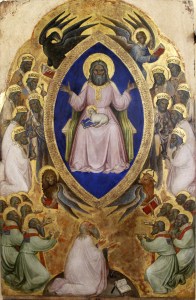
Final_Judgement_-_Polyptich_of_Apocalipse_-_Accademia_-_Venice_2016_-_crop

Image credit:  © José Luiz Bernardes Ribeiro /  from Wikimedia Commons
 

¡Viva Cristo Rey! (Part 2)

Yesterday, we celebrated one of my favorite feast days, the Solemnity of our Lord Jesus Christ, King of the Universe. Why is it one of my favorite feast days, you may ask? Not just because “Crown Him with Many Crowns” is my jam (really, though, it’s a fantastic hymn). I love this day so much because it is a day to celebrate the powerful truth that Jesus is Lord and I am not.

Praise God for that gift. As the liturgical year wraps up this week, I declare that truth with a sigh of relief in my lungs and with praise and gratitude in my heart—Jesus Christ is King. King over all my problems, King over our hurting Church, King over every situation in this past year that has made no sense, King over all the violence in the world and the turmoil in my heart, King over the days where I feel like I can’t do it, King over every. single. thing.

We praise You, Lord Jesus.

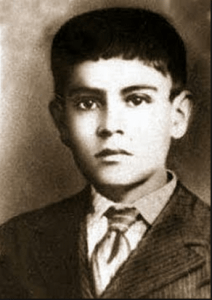
Saint_Jose_Luis_Sanchez_del_Rio
St. José Sánchez del Río

He is sovereign over all. We get to choose to surrender our control and let Him be King, no matter what the cost. A great Saint did this at just 14 years old, St. José Sánchez del Río. He lived in Mexico during the Cristiada movement of the 1920s, when a bloody war was waged against Catholics. The Church was under total control of the state, and it became illegal for Catholics to practice their faith in public. Monasteries and convents were shut down, Church property was taken over, and priests were arrested and killed for saying Mass. The Cristeros rose up to fight for Christ their King, and St. José asked his parents to join their army. He said, “For Jesus Christ, I will do everything.” He was their youngest member and became their flag bearer. St. José was imprisoned after giving his horse to the General and not being able to escape in time. While in prison, he refused to renounce his faith and could be heard frequently saying, “Viva Cristo Rey! Viva La Virgen de Guadalupe!”

St. José’s godfather was the mayor of his town, but he did not let him go. He told him if he just said, “Death to Christ the King,” he would let José go home to his family. But he refused, so he was ordered to be killed. The federalists cut off the soles of his feet with a knife and then made St. José walk ten blocks along a dusty, gravel road to his grave. The soldiers beat him and mocked him, and he just kept shouting, “Viva Cristo Rey!” They then stabbed him several times. They asked him what they should tell his father, and St. José replied, “That we will see each other in Heaven! Viva Cristo Rey! Viva La Virgen de Guadalupe!” With that, the soldiers shot him, and he died.

Jesus was St. José’s King, and he let Christ reign over every area of his life, even when it meant dying a death much like our Lord’s. Is Christ King over every part of your life, or is there anything else that reigns? The ultimate expression of our trust in God is when we have childlike dependency on our Savior and King. As the liturgical year comes to a close and we prepare for the coming of our Savior, where do you need Christ to be your King?

Viva Cristo Rey! Long live Christ the King!

P.S. A great movie on the life of St. José Sánchez del Río is For Greater Glory. Here’s a powerful clip!

¡Viva Cristo Rey!

Miguel_Pro's_execution_(1927)This weekend we will celebrate Christ the King Sunday, and today we honor the feast of Blessed Miguel Pro, who is known for his last words, uttered before a firing squad: “¡Viva Cristo Rey!” (“Long live Christ the King!”). As we reflect on Christ’s role as king within our own lives, Miguel Pro is an example to us of how we are to orient our hearts toward Christ above all else.

Miguel Pro lived in Mexico during a time of intense religious persecution. The secular government forbade all public worship, and as a Jesuit priest, Father Pro had to carry out his mission in secret. Disguised as a mechanic, an office worker, or a beggar, he administered the sacraments and served the poor. He was well aware of the dangers and knew that this mission would likely cost him his life, but he also understood that following Christ was what gave his life meaning in the first place. If it meant defying an unjust government, he would not hesitate; he would gladly lay down his life for the sake of Christ, who had died on the Cross for him.

In 1927, Father Pro was falsely convicted of an assassination attempt against President Calles and executed without trial. Intending to portray Pro as a coward, Calles sent a photographer to the execution. But this backfired, for the photo portrayed Father Pro as the saint he truly was: standing bravely with arms outstretched, embracing his cross and declaring Christ his king. The photo of his last moments, printed on the front page of newspapers throughout Mexico, galvanized the Cristeros, who were fighting against government persecution. His martyrdom was a powerful witness for Christ.

When our society contradicts the teachings of Christ, are we prepared to stand for what is right? Or are we ruled more by the common beliefs of the culture than by Christ Himself? Unlike Miguel Pro, we do not have to fear a firing squad for practicing our faith, but sometimes much lesser penalties—fear of being misunderstood, ignored, or ostracized—scare us away from allowing Christ to rule in every aspect of our lives. Let us pray to Blessed Miguel Pro to grant us his courage, that we may not allow the fear of how others may treat us to cloud our focus on Christ the King.


Image: Photograph of Miguel Agustin Pro, Mexican Jesuit, being executed by a firing squad in Mexico city, November 23, 1927 / PD-US

Parented by Gratuitous Love

There are many beautiful flowers in the nursery garden, but I am drawn at once to Baby M*.  Only a few weeks old, he is the smallest of all, weighing in at only 2.5 kilos—the equivalent of a small sack of flour with an extra tablespoon or two thrown in.  The list of his medical conditions is longer than he is.  He can do nothing for himself; only receive.

Abandoned at birth, he is without parents; even his name is a gift of the state.  Unlike the other children who reward my attention with laugher and hugs, Baby M lacks the strength even to smile.  He is too weak to suck from a bottle, and so a makeshift feeding tube helps to provide nourishment.  A colostomy bag compensates for his inability to digest and process food properly.  Even his cry is weak—unable to raise his voice, he raises plaintive eyes instead, and his tiny fist squeezes my heart.

*            *            *

Before holding this little one, I would wonder at the words of Jesus to Saint Faustina: “The greater the sinner, the greater his right to my mercy.”

Surely sin has no power, no rights.  But mercy is not about the power of the sinner, but the power of God’s love.  Our weakness draws and compels the heart of God.

“God doesn’t love the way human beings love. We love people because they’re attractive, funny, talented, rich, and powerful,” notes author Father Michael Gaitley.  “God loves us because we’re so weak, broken, and sinful.  God’s merciful love is like water that rushes to the lowest place.”2

In today’s Gospel, Jesus comes to Jericho, and we are told He “intended to pass through the town.”  But then Zacchaeus, the chief tax collector and sinner, the Bernie Madoff of his day, is moved by the desire to see Jesus.  He too was small—so short of stature that he is unable to see Jesus because of the crowd—and so he climbs a tree to get a better look.

One can only wonder at what must have been an awkward sight, a grown man gawking from a sycamore tree.  But Jesus stops and looks up, and says “Zacchaeus come down quickly, for today I must stay at your house.”

This desire of Zacchaeus that moves him to climb the tree to see Jesus, in turn moves Jesus, compels Him.  “I must stay at your house.”

The crowd is scandalized. “They began to grumble.”  Zacchaeus is a notorious sinner, a thief, one of the “bad guys”; he has not behaved in a way to earn God’s favor, he is not one of their own.  His smallness was not only physical. But Jesus explains the “must”: “the Son of Man has come to seek and to save what is lost.”

There is no recording of a preceding moral lecture by Jesus, no setting of prerequisites for His love.  Rather it is the invitation itself which causes Zacchaeus to hasten and “receive Him with joy.” It is the Encounter with Jesus which moves him to moral conversion: “Behold, half of my possessions Lord, I will give to the poor, and if I have extorted anything from anyone, I will repay it four times over.”

Moral behavior is not the prior condition for the love of God, but the consequence of it.  When we receive the unconditional love of God, we are freed to give it and to live it.  Yes—virtue is necessary; we cannot exempt ourselves from the laws of God.  But law is ultimately at the service of love.

It is our need and our desire which knock on the heart of God, which open the floodgates of His mercy.  There is nothing we can do to earn it; we can only accept or refuse it.

The church has always insisted on the right to baptize infants for this reason: all is gift.  We do not wait for proof of wisdom or virtue or even understanding.  We are parented by a love that is gratuitous, born of the goodness of God, not our own.

*            *            *

Baby M’s little heart is also weak, and it is clear from the beginning that his visit with us will be a short one.  And so we give him a special bath, and dress him in white, to prepare him to meet his Father.

On July 18th, his little body gives out, and he is transferred to a New Home, to be cradled in arms that will never let go.  And these days I ask for his help and intercession, that he might now assist me in my weakness.

Little saints, pray for us!

Baby Parenthood Finger Father Hand Love Mother

* Not his real name or initial

2 Father Gaitley explores this theme extensively in his highly recommended book, 33 Days to Merciful Love.  The quote cited is from this article: https://www.northtexascatholic.org/local-news-article?r=AGVJ9RUW3M

Image credit: (modified) from MaxPixel [CC0], via Wikimedia Commons

Unceasingly

“As Jesus approached Jericho
a blind man was sitting by the roadside begging,
and hearing a crowd going by, he inquired what was happening.
They told him,
“Jesus of Nazareth is passing by.”
He shouted, “Jesus, Son of David, have pity on me!”
The people walking in front rebuked him,
telling him to be silent,
but he kept calling out all the more,
“Son of David, have pity on me!”
Then Jesus stopped and ordered that he be brought to him;
and when he came near, Jesus asked him,
“What do you want me to do for you?”
He replied, “Lord, please let me see.”
Jesus told him, “Have sight; your faith has saved you.”
He immediately received his sight
and followed him, giving glory to God.
When they saw this, all the people gave praise to God.” (Luke 18:35-43)

Dear friends, I cannot tell you the number of times my prayers for certain intentions have dwindled over time because they’ve gone seemingly unanswered. I get disheartened, listen to that tiny voice of despair telling me to doubt God’s faithfulness, and don’t pray about it as much—and not out of surrender, but out of fear, out of feeling unworthy.

Mea culpa. Jesus, Son of David, have pity on me.

The blind man in today’s Gospel was persistent in his cry for Jesus. He, a beggar, an outcast and someone seen as less-than, didn’t doubt that Jesus would hear and answer him because of who he was. Even when the crowd told him to be silent, they couldn’t stifle the outcry of his prayer.

When people tell us to give up, when the world screams that God isn’t good, we cannot cease our prayer. When we pray steadfastly, we allow the steadfast love of God to enter our hearts. We renew our trust in Him each time we cry out to Him. We proclaim how much we need a Savior.

In acknowledging Jesus as the “Son of David,” the blind man is declaring that Jesus Christ is Lord, that as the Son of David, He is the Messiah. This shows his great faith in who Jesus is.

Even though the man couldn’t see Jesus and the miracles He was working before his sight was restored, he had faith. He believed that Jesus is the Savior. When we can’t see what God is up to or when our prayers seem ignored, we can have faith that Jesus hasn’t left the picture. He never abandons us, and He always hears and answers our prayers.

One of my favorite worship songs, “The King of My Heart,” has a line that says, “You’re never going to let me down.” Has God ever let us down? Even in the darkest moments, no. Will God ever let us down? No, we can trust in His unending love. We can pray unceasingly, knowing that God is with us, fulfilling our every need.

Everything Is Grace

In today’s Gospel reading, Jesus presents to us a startlingly bold exhortation:

Whoever seeks to preserve his life will lose it,
but whoever loses it will save it.
—Luke 17:33

This does not mean, of course, that we should be careless about our own lives. On the contrary; if our bodies are temples of the Holy Spirit, then we should treat all life—our own included—as sacred and worthy of protection. But in doing so we must remember that our lives have been entrusted to us by God; they are not our own. If we try to preserve them for our own sake, instead of for God’s, then our lives will become detached from the purpose imbued by their Creator and thus lose their meaning.

Jesus speaks here with a sense of urgency, warning us not to be caught unprepared at the judgment. The reading shakes us out of our complacency and gives us the sense that everything can change in an instant. If this is really true, then every moment carries great weight and meaning. Every second of our lives is an opportunity to be a conduit of the inexhaustible Source of all truth, beauty, and goodness in the world.

Jesus’s words are an invitation for us to stop wading in the shallows of our life and go out into the deep. He challenges us to let go of the worldly attachments that keep us tethered to the shore and to go forth in courage. All the beautiful things in this world only have meaning insofar as they reflect the beauty of the Creator. If we love God first and foremost, then we will see His beauty in everything around us. But if we cling to the things of this world for their own sake, forgetting that they are gifts from God, then we will ultimately be left unfulfilled.

May we deepen our awareness that everything is grace, that our very lives are given to us as invaluable, unmerited gifts.

There is the great spiritual principle that undergirds the entire Gospel: detachment. The heart of the spiritual life is to love God and then to love everything else for the sake of God. But we sinners, as St. Augustine said, fall into the trap of loving the creature and forgetting the Creator. That’s when we get off the rails.

We treat something less than God as God—and trouble ensues. And this is why Jesus tells his fair-weather fans that they have a very stark choice to make. Jesus must be loved first and last—and everything else in their lives has to find its meaning in relation to him.

—Bishop Robert Barron

Being Led > Being Content

R. The Lord is my shepherd; there is nothing I shall want.
The LORD is my shepherd; I shall not want.
In verdant pastures he gives me repose;
Beside restful waters he leads me;
he refreshes my soul.
R. The Lord is my shepherd; there is nothing I shall want.
He guides me in right paths
for his name’s sake.
Even though I walk in the dark valley
I fear no evil; for you are at my side
With your rod and your staff
that give me courage.
R. The Lord is my shepherd; there is nothing I shall want.
You spread the table before me
in the sight of my foes;
You anoint my head with oil;
my cup overflows.
R. The Lord is my shepherd; there is nothing I shall want.
Only goodness and kindness follow me
all the days of my life;
And I shall dwell in the house of the LORD
for years to come.
R. The Lord is my shepherd; there is nothing I shall want.

PS 23:1B-3A, 3BC-4, 5, 6

Today’s readings contain what is quite possibly the most well-known Psalm in all of Scripture. Psalm 23 has been used in all sorts of media: presidential speeches, blockbuster movies, hip hop and metal songs alike. Psalm 23 provides an easily recognizable religious reference, a comforting message, a clear, straightforward refrain. The desire for contentment, provision, and protection are ubiquitous, and align pretty well with our basic human needs¹.

In praying with the Psalm today, however, I felt that the Lord was calling us beyond the easy reading. We are not guaranteed access to the LORD’s protection and provision. Our calling does NOT boil down to the platitude, “We just need to see where God already is in our lives and be content with our current life circumstances.” I learned not be jealous and/or greedy in kindergarten; I believe the Holy Spirit has more for us here.

Today I took some of my GRE study–inspired reading comprehension skills and broke down the refrain: “The LORD is my shepherd; there is nothing I shall want.”


Results: I shall want nothing. I will rest beside still waters and verdant pastures, His rod and staff give us courage.

Prerequisites (aka what WE need to do): The LORD must be our shepherd. We must be guided. We must be anointed.


Take a look at that second part! So often we focus on the results, without asking what we need to do! Part of the reason I believe this passage has gained so much traction in popular culture is the hope for deliverance. It’s not wrong to ask to be spared or delivered, but will it have any effect if we don’t meet the conditions or put ourselves in the position to receive it? Miracles are wonderful gifts from God but are only truly useful if our hearts are primed for relationship with Jesus (see: Nazareth, Mark 6).

So how do we prime our hearts for the LORD? How do we make ourselves ready? How do we get the God of the Universe to be our shepherd, give us all that we need, and protect us?

By being sheep, of course. Shepherds can only be shepherds to sheep. In reading through Psalm 23 today, Jesus spoke clearly and powerfully to my heart: “These words are not about being content or finding good in your life as it is, these words are about being led.”

Are we willing to follow the LORD? Do we ask where we should go? Do we trust that his paths lead to verdant pastures, or do we stick to our own, temporarily comforting paths and habits? Where in your life can you ask Jesus to lead you? Where are you currently trying so hard to find your way, and have yet to really pose the question to Him?

Jesus’ promise is real, it is beautiful, and it is comforting. He DOES lead me to verdant pastures. He DOES give me rest. He DOES protect me from my enemies and from fear. We WILL dwell with the LORD.

All he asks? “Come, follow me.”


  1. Yes, yes, Maslow’s hierarchy is outdated and problematic in many of its forms. Just making a point here.

Another Saint I Learned to Like

“I am glad to hear that the Church considers her a saint, because I thought she was a witch!”  These words, allegedly spoken by a priest of St. Frances Xavier Cabrini, reinforced in my mind the already intimidating image of this saint, whose feast we celebrate today.

That she was fearless and feisty was to her credit, I supposed.  But I found myself cowed by her seemingly impossible standards of self-sacrifice.  It has been recounted how, when just a young girl, she wanted very much to be a missionary.  Then, one day, when about to eat a piece of candy, she was told that missionaries could not eat such sweets.  So she didn’t.  Not that day, NOT EVER AGAIN.  She didn’t complain—even when suffering from ill treatment, or ill health—and forbade her fellow nuns to complain about ANYTHING.  Not even the weather.  She was relentless in her pursuits, in both her numerous missionary projects (schools, hospitals etc. throughout the world) and in her pursuit of holiness.

Even the Girl I Ought To Be does not aspire to such herculean efforts, and Real Me, rather than taking inspiration from her, merely added her to the list of Saints I Don’t Like.  What common ground could I have with such a saint?

So it was something of a surprise when I found myself at her shrine, one morning in May, while preparing for a talk.  The shrine offered the best chance for Mass, so there I was, praying not a few feet from the altar under which her body is encased.

That night I was to give a talk on Mary’s Fiat, and while I had been preparing for some time, I felt a subtle urge to change what I was going to say.  To talk about fear.  Fear?  I questioned the voice inside.  How does fear relate to anything?

Was Mother Cabrini smiling, just a little, when the priest began his homily, and began to speak of fear?  How in fact the saint I saw as fearless had some very big fears indeed.  One of these was of water.  When she was a child of seven, little Francesca Cabrini would make paper boats, fill them with violets (pretending they were her missionaries) and float them down the river.  She was shy and quiet then, and this solitary activity brought her much peace and joy.  Until one day she fell in.

Nobody knows how she got out.  She was discovered on the water bank, soaked and shaken, with no memory of who had rescued her.  Credit was given to her Guardian Angel, and yet for the rest of her life Francesca had a deep fear of drowning.

God did not take away her fear.  Rather, He allowed her to offer it back to Him, repeatedly.  No less than twenty-seven times, St. Frances Cabrini crossed the oceans between continents.  This was more than a century ago, and so passage was by boat, and slow, a matter of days.  Yet she did it, again and again, in spite of her fears.

Her first time crossing the Atlantic brought her to New York City. Like her patron, St. Francis Xavier, she had wanted to go to China.  But the pope told her, “Not to the east, but to the west.”  And so New York it was, where she arrived with a few nuns to begin her first mission in a convent that had been prepared for them.  Only, there was no convent—there had been some miscommunication—there was in fact no lodging prepared at all.

Mother Cabrini and her nuns spent the first night in a boarding house infested with bed bugs and mice.  Mice, I was to learn, were another fear of hers (I see her smiling at me again).  She spent the whole night sitting up, using the occasion to intercede.   So began her work among the immigrants of NYC.

How did she do it?  Like the apostles in the boat, terrified of the storm about them, she was comforted by the voice of Jesus, saying “It is I.”  She knew that voice personally.  She had a strong devotion to the Sacred Heart (one of her nuns spoke to me of her mystical “exchange of hearts” with Jesus).  She knew that He would carry her, that He would provide for her poverty and weakness.  He continued to reward her trust in Him.

In April of 1912 she was scheduled to sail yet again from England to New York.  But urgent business directed her elsewhere that day, and she canceled passage for herself and another sister.  She can only have wondered, later, when she saw the news that the boat she was booked on, the Titanic, had sunk off the coast of Newfoundland.

Why was her life spared?  We can talk casually about the mysterious plans of God.  Other saints were on board that day when the ship went down.  But God had chosen her for further things.

Ultimately, for St. Frances Cabrini, for Our Lady at the Annunciation, for each of us—our Yes is not to an abstract plan, but to a Person.  To Someone, not merely something.

When we offer even our fears to God, He responds by giving us more gifts than we could imagine.  St. Frances Xavier Cabrini founded the Missionary Sisters of the Sacred Heart of Jesus, and more than 67 institutions throughout the world.  She was the first American citizen to be canonized.

May she carry our prayers to the heart of Jesus.


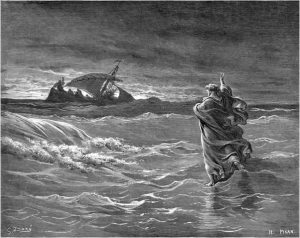
Jesus Walks on the Sea


Photo Attribution:

Jesus Walks on the Sea by Gustave Doré [Public domain], via Wikimedia Commons


Freedom in Forgiveness

“Jesus said to his disciples,
“Things that cause sin will inevitably occur,
but woe to the one through whom they occur.
It would be better for him if a millstone were put around his neck
and he be thrown into the sea
than for him to cause one of these little ones to sin.
Be on your guard!
If your brother sins, rebuke him;
and if he repents, forgive him.
And if he wrongs you seven times in one day
and returns to you seven times saying, ‘I am sorry,’
you should forgive him.”
And the Apostles said to the Lord, “Increase our faith.”
The Lord replied, “If you have faith the size of a mustard seed,
you would say to this mulberry tree,
‘Be uprooted and planted in the sea,’ and it would obey you.” (Luke 17:1-6)

“Have you forgiven him yet?” my friend asked as we sat in the driveway of my parents’ house, heat running in the car on a cold December night.

Her words pierced my heart. “Oh…” I said, “I thought I did. But I don’t think I actually meant it with my whole heart.”

Forgiveness—it’s sometimes so hard for us, yet always so easy for Jesus. See, I used to think that forgiveness meant I was saying it was okay that someone hurt me. It wasn’t until I was deeply wounded by another several years ago that I figured out what forgiveness was all about. I remember hearing someone say the words forgiveness and freedom in the same sentence. My gut reaction was, “I want that…is that really possible?”

In today’s Gospel, Jesus calls us to forgive, even if the same person hurts us seven times in one day. Forgiveness isn’t saying that someone else’s sin against you is okay—forgiveness says, “What you did hurt me, but I put you in God’s hands. I do not desire your destruction.” Forgiveness is surrender, casting our cares on the One who cares so deeply for us.

Forgiveness in graver matters takes time and is a journey, and that is okay. With the situation I mentioned above, I would kneel and say the words “I forgive_____” and pray a Hail Mary for the person every Sunday before Mass until I started to believe it in my heart.

Forgiveness softens our hearts; holding onto unforgiveness leaves us bitter, angry, and unhealed with walls around our hearts screaming, “DON’T come in!” Forgiveness frees; unforgiveness enslaves. We become chained to our hurt. If we don’t forgive, we may as well put a millstone around our own necks. Is there someone in your life you need to work on forgiving?

I find it fascinating that the Apostles’ response to Jesus’ teaching on forgiveness was, “Increase our faith.” Their hearts were pierced like when my friend invited me to truly forgive. I imagine them seeing the faces of the people they knew they needed to forgive flash before their eyes as Jesus was talking.

And how often do we struggle to forgive ourselves? I know I do sometimes. I’ve walked out of the confessional before only to beat myself up about my sin a few hours later. The liar of shame creeps in and tells us our sin defines us and that we’re not good.

When St. Margaret Mary Alacoque (the saint to whom Jesus encouraged devotion to His Sacred Heart) began having visions of Jesus, her spiritual director, St. Claude, was very skeptical at first. He told her to ask Jesus what the last mortal sin was that he confessed. Jesus answered, “I don’t remember.” How powerful is the ocean of mercy of our Lord!

Father, increase my faith so that I may more easily forgive others. Strengthen me to be courageous and put the people that have wronged me and wounded me into Your wounded hands. So often others’ own woundedness leads them to hurt me; help me to have an understanding heart towards that. Increase my faith so that I may better forgive myself. Help me to know that I am not defined by my sin but as Your precious child. Help me to forgive like You do, Lord Jesus, and set me free. Remove any shame, fear, hard-heartedness, or bitterness from my heart. May I have great faith in Your mercy, Your love song for Your people.

Sacred Spaces

Jesus answered and said to them,
“Destroy this temple and in three days I will raise it up.”
The Jews said,
“This temple has been under construction for forty-six years,
and you will raise it up in three days?”
But he was speaking about the temple of his Body.
—John 2:19–21

Do you not know that you are the temple of God,
and that the Spirit of God dwells in you?
If anyone destroys God’s temple,
God will destroy that person;
for the temple of God, which you are, is holy.
—1 Corinthians 3:16–17

As human beings, we are designed to live in communion with one another. The Church is meant to be a shared space in which we find shelter for our souls, serving one another and seeing each other with the eyes of Christ. A physical church building serves as this sacred space in its connection with the ultimate Temple, Jesus Christ Himself; and we, too, become temples of the Holy Spirit when we open our hearts to receive Him. No sacrificial offering at any temple could be greater than what Christ offered for us: His very self, His own Body. And so we unite ourselves with this perfect offering, and thus also with one another—all part of the sacred Body of Jesus Christ, one living, breathing organism.

In today’s Gospel, Jesus rebukes the money-changers in the temple for entering into this shared, sacred space not with the intention of communing with God but for selfish, materialistic purposes. They were not seeing their fellow men as God does but rather as potential profits, and they showed no compunction about carrying out this individualistic mentality in a communal place of prayer. Just as Jesus did, we also may experience feelings of anger toward those who profane what is sacred within the Church—particularly after the abhorrent clerical scandals that have been uncovered during this past year. It is profoundly upsetting to everyone else within the Body of Christ to see corruption and rot existing in what is supposed to be a sacred shelter for us.

We are called to drive out the money-changers in the temple on every level—to root out corruption in the larger Church, to foster interconnectedness and reverent prayer within our parishes, and to cleanse our own hearts from the stains of self-centeredness and greed. Imagine the commotion that the money-changers caused in the temple, distracting everyone from the presence of God. What things are creating noise and distractions within our own souls? What pursuits keep us from seeing ourselves as sacred vessels, carrying Jesus into the world? Let us begin there.

God builds his house; that is, it does not take shape where people only want to plan, achieve, and produce by themselves. It does not appear where only success counts and where all the “strategies” are measured by success. It does not materialize where people are not prepared to make space and time in their lives for him; it does not get constructed where people only build by themselves and for themselves. But where people let themselves be claimed for God, there they have time for him and there space is available for him. There they can dare to represent in the present what is to come: the dwelling of God with us and our gathering together through him, which make us sisters and brothers of one house….

The beauty of the cathedral does not stand in opposition to the theology of the cross, but is its fruit: it was born from the willingness not to build one’s city by oneself and for oneself.

—Cardinal Joseph Ratzinger (Pope Benedict XVI)