How Many Loaves Do You Have? Go and See!

“Give them some food yourselves.”—Mark 6:37

At the beginning of today’s Gospel, we get a glimpse into the Sacred Heart of Jesus.  “When Jesus saw the vast crowd, His heart was moved with pity for them, for they were like sheep without a shepherd; and He began to teach them many things.”  As He teaches, their hunger grows, in more ways than one.  And soon it is “late.”

The disciples see the physical hunger of the crowd as a problem, and want both the problem and the people to go away.  “Dismiss them…so they can go and buy themselves something to eat,” they urge Jesus.

Jesus surprises them, instead saying: “Give them some food yourselves.”  They are stunned.  “Are we to buy 200 days wages worth of food and give them something to eat?”

He asks them, “”How many loaves do you have?  Go and see.”

It is important not to rush past this question.  Having read the spoilers, we know the answer: five loaves and two fish.  And we know what Jesus will do, and how the more than five thousand will be fed that day, and how there will even be twelve baskets of food left over.

But let us ponder for a moment this command and question of Jesus.  It is not enough for Jesus that His disciples hear His words as a message to be learned and taught.  Rather, He wishes for them to share in His heart, in His mission.  Nor can they pray from a safe distance for God to “take care of” the issue.  They are to be an integral part of His work.

First, however, they must come face to face with their inadequacy.  What do they have to offer? “Go and see.”  They are to encounter, concretely, their own inability to provide for the people.  On their own, they do not have what it takes.  They need God to work.  And yet, in the mystery of salvation, God calls them (and us) to cooperate with His work.  Our own experience of poverty does not exempt us from mission.  Humility rather makes room for God to work, but He nonetheless elevates us, drawing us into His divine mission.

The disciples bring the five loaves and two fish to Jesus.  Jesus could have fed the crowd with just one loaf, or with the bread and not the fish.  Or, being God, He could have provided His own loaf and fish.  Instead, He asked that they give what little they had, and all that they had. 

God invites us to experience our poverty, our nothingness—but then asks us to give anyway.  He loves us in our poverty, but doesn’t leave us there: He invites us to make a gift of what we have—all of it.  Sometimes we object because it seems too much.  But just as often, we object because it seems too little.

We prefer grandiose gestures, which make us look or feel good.  When God invites us to give lesser things, we balk.

Caryll Houselander writes of the woman who had a great desire to sacrifice her life to God as missionary martyr to cannibals, and was disgruntled that He never took her up on her offer.  But she was unwilling to offer God the sufferings of her infirmities and old age. 

“I knew once the primmest old invalid lady who could well have offered her helplessness to God, but she had a grievance against Him because He had not permitted her to be eaten by a cannibal for the Faith; she could not accept herself as a sick woman, but she would have achieved heroic virtue as a cutlet!” (Reed of God, p. 50)

We like to think of our saints as superheroes. But Saint Therese of Lisieux was by all accounts so “boring” that her fellow sisters feared there would be nothing to write in her obituary.  Hers was not a life of great deeds, but of great love. She offered to God the smallest of things—and all things—with this love, and in so doing became a great saint.  She was aware of her poverty and weakness and littleness, and so made room for God to act in her life in very big ways.

Father Walter Ciszek, on the other hand, lived a life of remarkable strength and courage.  He became a priest, and then went to Russia as a secret missionary.  His daily life there was one of marked suffering, even before he was arrested (accused as a spy) and imprisoned; he was tortured, and later sent the Gulag in Siberia.  The details of his sufferings are astounding, and can only be called heroic.  Yet for Father Ciszek, the defining moment of his life, his “conversion,” was a moment of abject failure.

While imprisoned he was subject to routine torture in a effort to get him to make a false confession.  He was determined to resist; determined to outwit his captors; determined if necessary to die for Christ.  Instead he capitulated and signed.

He was devastated; it was a moment of “great darkness” as he confronted his failure, his poverty, the realization that he did not in fact “have what it takes.”  Then suddenly grace gave birth to profound freedom, as he realized that it was precisely his weakness that God was asking of Him.  He had been relying on His own strength; henceforth he would trust completely in God’s will.

Very few of us will be called in the next twenty-four hours to make heroic offerings to God. Yet each of us is invited into the heart of Christ, to give what we have at His asking.  To begin with that first step in trust—to put bread into that first pair of hands, and then another, and then another.  To watch with reverent awe as God multiplies our poverty into abundance.

Image credit: Marten van Valckenborch [Public domain] from Wikimedia Commons

Go

“When Jesus heard that John had been arrested,
he withdrew to Galilee. 
He left Nazareth and went to live in Capernaum by the sea,
in the region of Zebulun and Naphtali,
that what had been said through Isaiah the prophet 
might be fulfilled:

Land of Zebulun and land of Naphtali,
the way to the sea, beyond the Jordan,
Galilee of the Gentiles,
the people who sit in darkness
have seen a great light,
on those dwelling in a land overshadowed by death
light has arisen.”

 From that time on, Jesus began to preach and say,
“Repent, for the Kingdom of heaven is at hand.” – Matthew 4:12-17

Today’s Gospel can often be glossed over and summarized as the start of Jesus’ public ministry. But I couldn’t get past the first line: “When Jesus heard that John had been arrested…” The weight of that hit my heart. Jesus had just spent 40 days and 40 nights praying and fasting in the desert, and now He hears of His cousin’s arrest and knows his death is imminent. Yet this news does not prevent Jesus from going where the Father is leading Him; I would even daresay it fuels Jesus to go where He needs to go, no matter what the sacrifice and no matter what the cost.

Jesus goes to Galilee not to hide and avoid being arrested Himself, but to fulfill the great prophecy from Isaiah that He is the Messiah! He is the Light who scatters all darkness! In hearing of John’s arrest, I imagine the reality of what Jesus was about to undertake in His public ministry, culminating in His own death, started to sink in. In a moment of what could have been great fear leading to inaction, Jesus begins to preach. The Word takes on a voice. And how the aching world needed His preaching, His healing, His love, His mercy.

What is it time for you to begin? What are you holding back from God? I think sometimes we all have a sense of where God is calling us, we’re just too afraid. I am right there with you in battling the fear. What steps can we begin to take to go where He is leading us?

Last week I wrote about the anointing we have received in Baptism, and today’s first reading proclaims twice that we belong to God (1 John 4:4-6). We can have great confidence in Who we belong to and in the One who goes before us in all things. Brothers and sisters, I don’t know what your specific mission is in this life. But I do know that you are needed. You, as Catholics, are desperately needed in this world. So whatever it is, wherever He is calling you, take that first step—make that phone call, speak up when you’d normally stay silent, write that song, go to Confession, take that time in prayer that you’ve been avoiding. Go. More of Him, less of us. All for His glory, all for His Kingdom, all according to His will.

You Have Won My Heart

“But you have the anointing that comes from the Holy One,
and you all have knowledge.” -1 John 2:20

Dear brothers and sisters, as 2018 wraps up in this Octave of Christmas, something that’s been on my heart for the past few months that I am making my goal for 2019 is focusing back on the heart-to-heart relationship with God. It is so easy to lose sight of Whose we are.

We have received God’s anointing in Baptism, and from this anointing flows our identity as His sons and daughters, which is sealed in the Sacrament of Confirmation. God has put an indelible mark on your soul that cannot be washed off. His anointing of you is His irrevocable choice to make you a part of His family. No matter how much we fight and struggle with our sonship and daughtership as His beloved ones, no matter how much we wrestle with doubt and lies and fear, God says to us: “You are Mine!” And He says this with great delight over you.

What does this anointing look like in your life in a tangible way? From His anointing flows your purpose that clarifies why you were born. You are certainly not a mistake. You are not an exception to the faithfulness of God’s love. You are not an exception to the fulfillment of His call for your life. You are chosen. You are His. I will say it again: He delights in you, His precious child.

“But to those who did accept him
he gave power to become children of God,
to those who believe in his name, 
who were born not by natural generation, nor by human choice nor by a man’s decision but of God.” -John 1:12-13

I want 2019 to be a year of going back to the basics of focusing on God’s love for me and loving Him wholeheartedly in return. I want this to permeate my soul so much that it constantly outpours for others. I want to fall in love with the Lord over and over again. He dwells within us—our bodies are His temple. How often I forget that! We don’t have to go far to find Him. He’s already with us, already loving us, eyes already on us. St. Teresa of Avila said, “We need no wings to go in search of God, but have only to find a place where we can be alone and look upon Him present within us.”

Lord God, we thank You and praise You for choosing us as Your sons and daughters. Thank You for Your unending patience with our weaknesses. Thank You for Your kindness. Thank You for rejoicing at even the smallest steps we take towards You. No matter the season of life, no matter what prayers we are waiting on answers to, Lord, help us to make this a year of more of You and so much less of us. Help us to fall in love with You again. Help us to find You in the stillness of our hearts, and to be disciplined in silent prayer. Help us to bask in the sight of Your delight in us. Unravel and soften our hearts in a deeper love for You, God. We love You, Lord. Help us to love You more and more. Amen.

“And the Word became flesh
and made his dwelling among us,
and we saw his glory,
the glory as of the Father’s only-begotten Son,
full of grace and truth.” -John 1:14

The Baby Who Changed Everything

Merry Christmas Eve, friends!

Last fall, I was blessed to go on a pilgrimage to the Holy Land. One of the more comical moments of the trip was the day we went to the Church of the Nativity in Bethlehem. Our group made our way down the narrow stairs to the cave where Jesus was born. It was wall-to-wall people, everyone wanting to shove their way through to kneel down and kiss the 14-point star on the floor where our Savior was born (14 points representing the 14 generations leading up to Jesus).

Despite the crowds, I was in awe and humbled by the simple little cave, and I was hoping for a powerful moment with our Lord when it was my turn to kiss the place where Jesus first met the earth. As I knelt down in reverence, imagining how the shepherds felt as they came to see Jesus, one of the people behind me literally shoved me onto the star. I laughed a little to myself and whispered, “Sorry, Jesus,” as I kissed the star, hearing the security guard in the background yell, “HEY! Watch what you’re doing!” at the person who pushed me.

.

Nativity Star
The picture of the 14-point star at the Church of the Nativity in Bethlehem that I somehow managed to capture in the crowds.

Though it was anything but a “Silent Night” moment of prayer, there was still something so profound about all the people who so badly wanted to cram into the place where Jesus was born. In our lives, what lengths do we go to to seek our Lord? What do we let get in the way? If we were the shepherds, if we were the Wise Men from the East, would we have trusted and followed the star to find the Messiah? Sometimes we need other people to shove us face-to-face with God, to give us the extra push we need to get past our fear to say yes to Him.

The crowd in that cave in the Church in Bethlehem was perfectly reminiscent of the mess Jesus came into when He was born. He was born among animals and dirt, sin and shame. He didn’t wait until we were in a perfect place to come into the world. Better yet, God chose to send His only Son into the world as a baby boy, totally dependent on human beings just like you and me to care for Him.

Who doesn’t love a cute baby? What baby can’t melt a person’s heart? Jesus knew that sometimes we find God hard to relate to, hard to connect with. God not only took on human flesh to understand what it means to be human, but He became a little baby to go to any length to help us know and love Him more.

I’ve been praying the St. Andrew Novena, which Erin wrote about last month. The most impactful part of the prayer for me has been that it asks Jesus to pray for you and hear your intentions in the exact moment of His birth. How awesome is that, that God works outside of time and that is possible! So, friends, tonight, I encourage you to talk to baby Jesus. Really talk to Him. Delight in Him. Adore Him. Hold Him and rock Him. Bask in His love, His innocence as a precious baby boy. Give Him your whole heart and do not be afraid—after all, what could a baby do to hurt you? Let the baby who changed everything change you.

Blessed Christmas to you and your loved ones! God is with us!

The Messiness of Advent

Dear fellow pilgrims,

This Advent for me has been quite active. Well… about as active as a very pregnant woman can be. Right now I’m about eight and a half months pregnant, and my favorite activity for the past few months has been “nesting,” getting my apartment clean and organized and ready for baby boy #2. I’ve been trying to connect that idea to “nesting” in my soul for the coming of baby Jesus, cleaning out the dusty places of my heart, organizing the clutter that has been keeping me occupied and worried instead of open and generous.

The first time I was pregnant, just two years ago, I had a similar focus about “making space” for the coming of Jesus. My Advent was so powerful, deep, and contemplative. I had time and much fewer interruptions, so it seems, to enter into quiet prayer and think deeply about the mystery occurring in my womb. Now, being pregnant during Advent for a second time with my first baby boy now a curious and active toddler… things are a little different. I have things to do, people! Like waddle around taking care of a little toddler while making sure I catch my breath and my beachball-sized belly doesn’t hit any corners. And vacuum. Everywhere.

Today, when I was vacuuming the always-dirty dining room area, Leo (our toddler) was being less than helpful. I was getting pretty frustrated with how it was taking forever to clean up his mess from lunch, and I began to lament interiorly about how cleaning up messes will be a job I will do as a mother pretty much all my life. I began to think about the repetitiveness of cleaning up as a rhythm of life on this earth, as a consequence of original sin. Because dust is just a bunch of dead particles, and basically any other activity having to do with cleaning (showering – sloughing off our own dead skin cells) also can tie into consequences of original sin in our earthly lives. My contemplation ended around being grateful that one day in Heaven, I won’t have to clean up anymore. I can just hear the choir of moms in Heaven rejoicing now…

When I took a little more time to calm down, I realized it was around Leo’s nap time, and he was probably fussy because he needed something and not because he wanted to ruin my plans to clean up our apartment. As I walked and pushed his stroller while he drifted off to sleep, the Lord met me again to continue this “dirt, sin, and nesting” contemplation. I read the Psalm for today on my phone:

“R. Let the Lord enter; he is the king of glory.

Who can ascend the mountain of the LORD?

or who may stand in his holy place?

He whose hands are sinless, whose heart is clean,

who desires not what is vain.”

I saw myself fervently cleaning, rearranging, dusting, organizing the things cluttering my heart. Check, check, check. Yes, I totally was following this Psalm. My plans for Advent were being executed well. Martha-heart, engaged and satisfied. But then I read it again and the refrain stood out: Let the Lord enter.”

My mental image changed. I saw myself for what this process really was: me trying to make my heart clean in the way I thought Jesus wanted it to be, keeping my hands tied against sin in the way I think He wants me to, to keep my desires away from things that I think are in vain. I wasn’t really letting or inviting the Lord to enter into these things at all.

Turns out, it had been much too long since I had truly invited the Lord to enter into all of my preparation, and He was only “there” because I trusted my own plans were following His “orders” more than I wanted Him to be intimately involved with them.

I thought the result He wanted was just a clean place for Him to reside, not that He actually wanted to help me clean, and have that process be as much of a purpose as the end result. But again, even thinking in terms of an “end result” is faulty, because of original sin, we will be fighting this inner battle all our lives.

My heart softened. I teared up. What a Mary/Martha moment… Jesus doesn’t want me to just produce my own clean heart, my own interior life, He wants to help me in the process of cleaning. I need to allow the Lord to enter. He wants to be there in the mess, in my mess, showing me where to go next, what to do in order to make my heart ready for Him to reside comfortably and happily within me. I pictured myself frustrated with my progress, but having Him take my hand gently and helping me begin again.

How much better are His ways than ours! Sometimes the transformation we so desperately long for – or the transformation we tacitly deny because we are too into our own plans – is just a simple invitation away:

“Lord, please enter into my mess. Show me what to do.”

One great truth of Advent is that Jesus entered into our earthly mess. Our collective, awful, dirty mess of a world stricken by sin and wandering from God. And He’s not afraid of it, He’s drawn to it. The way He loves us is being in the mess with us, taking on our flesh without taking on our mess. He teaches us how to be in the mess of life without becoming a mess… or messier than before. And because He is the Way, He must be in our processes. We must invite Him in without being ashamed of our mess. And many times, the mess we so desperately need to clean is the one most invisible to us, in the darkest corner of our hearts. We must invite Him in to reveal us to ourselves.

As we anticipate Christmas, let us be reminded that Jesus arrived into this world in a dark, messy – and unsanitary – cave. There are many quaint and pretty ways to visualize and portray the Nativity scene, but let’s ask the Holy Family to reveal to us the more unsavory elements of the Christmas story. Let us meditate on the reality of the Nativity scene. (As a pregnant woman, thinking about farm animals rolling around in the dirt while Mary labors and gives birth is enough mess to think about.) Let us enter into their mess so we can better grasp the truth of the Incarnation, how it completely overwhelms and transforms the mess of humanity into a proclamation of the endless merciful love of God for humanity.

Pax Christi!

-Alyssa

Rejoicing in the Waiting

This Advent, I’ve discovered a newfound love for the hymn, “O Come, O Come Emmanuel.” There is such a richness and beauty to these words of yearning and aching for our Savior. Even just the word “O” at the beginning of each verse is filled with longing. In the chorus, the song instructs us to rejoice because God will come to save His people. This is important—songs like “Joy to the World” are about rejoicing because the Lord has come, but “O Come, O Come Emmanuel” is about rejoicing in the waiting—waiting for Jesus’ second coming, waiting for an answered prayer, waiting for healing, waiting for God to show us where He is calling us to next—whatever it may be.

This third week of Advent, we are called to rejoice because we are *almost* to Christmas, not because we’ve already made it. We’re called to rejoice in the uncomfortability of waiting, of that in-between place. For some people, myself included sometimes, being close to the end of a season of waiting can bring more anxiety than joy because of the lingering voices of doubts and what ifs.

But God’s promises are true. The Lord is near, and when we trust that He will complete the good work He has begun in us (Philippians 1:6), how can we not rejoice?

In today’s Gospel from Matthew, we hear the genealogy of Jesus, from Abraham all the way to St. Joseph. Fourteen generations of hopeful expectation, of messiness and imperfection, of striving to seek the Lord and listen to His will. When we look at the lives of the people in Jesus’ family tree in Scripture, we can see God’s hand at work bringing about His divine plan of salvation, though they may not have seen it at the time. But yet they trusted, and they rejoiced, even when things were hard. Infertility, betrayal, broken marriages, and war are just some of the trials that are found within Jesus’ ancestors. They were not immune to suffering, yet they rejoiced and trusted in God. Fourteen generations of the small and great surrenders of ordinary people to God’s will every day, all to fulfill His greatest work of our salvation.

There is the distinct difference between joy and happiness. Happiness is fleeting; joy is everlasting. Joy comes from being rooted in the truth that we are infinitely loved by God as His sons and daughters, that we are created in His image for a purpose, and that He will never forsake us, no matter what suffering we face. St. John Paul II said, “True joy is a victory, something which cannot be obtained without a long and difficult struggle. Christ holds the secret of this victory.” Joy comes from a place of steadfast trust in God, that no matter what, He is with us and is working for our good.

Brothers and sisters, I don’t know if this has been a difficult Advent season for you, or if things have been going well. I know for many this time of year is painful. But we can rejoice in the One who was, and is, and is to come—Christ our Savior.

Saturday night, I went to Adoration, and the church was dark except for candles that were lit and a spotlight on the monstrance. In the middle of the Holy Hour, the spotlight suddenly went out. But that did not mean that Jesus wasn’t there. He was still there, in the dark, even though it was hard to see Him. He was still there, loving us, calling us to seek Him, calling us to draw even closer. May we rejoice in the waiting and darkness of our own lives, confident that He is with us!

O Emmanuel, in our unsure journeys, we rejoice, secure in You. In whatever waiting we’re going through, we rejoice. We rejoice because You call us Yours. We rejoice in the gift of Your Incarnation. We rejoice in Your dying and rising for us. We rejoice that You are always sustaining us and never leave us. O come, O come, Emmanuel! Amen.

Hierophanies

Back in my undergraduate career, I took a fascinating class on Religious Studies. Coming from a small-ish town in Minnesota, I had a yearning to hear about the world and how people lived; my upbringing was about as homogeneous as it gets (unless you count the occasional interdenominational Christian marriage as “diversity”), so I wanted to soak it all in; I ended up majoring in Global Studies and Spanish, after all.

After I had knocked out my homework for my required classes, it was almost something of a treat to dive into the study of spirituality and find common threads and distinguishing characteristics of various religious experiences around the world.

Surprising (or possibly, unsurprisingly, if you’re familiar with the academic world), this class came with a dense vocabulary book; terms invented or repurposed to define the through lines between different expressions of spirituality. Until today, one term in particular has stuck in a way that others haven’t: Hierophany.

A hierophany, simply put, is a bursting through of the divine or the spiritual into humanity. It is a melding of the “sacred” with the “profane,” or at least an interaction between the two. Some traditions are rife with them; it is not at all uncommon for some peoples’ gods to manifest in regular, frequent ways.

Now in Advent, I’m drawn to reflect on this theme within my own beliefs: What constitutes a hierophany in Catholicism? Where does God burst through into our very human existence? How does Jesus Christ meet us?

In some ways, I would almost argue that the term doesn’t even apply; if you believe that God is ever-present, is he really ever breaking through any kind of divide between the “sacred” and “profane”? If the God-Man came to Earth as a human infant, can anything human truly be called profane?

But let’s flip the script. Can anything be more accurately described as a bursting through of the divine than the incarnation? What about the Eucharist? While it’s true that God is always with us, that His Spirit dwells within us, we also profess a unique faith in the Sacraments. The Sacraments reflect God’s understanding of the very human desire for a tangible, material experience of the divine.

Sisters and brothers, GOD CARES FOR US. Even the imperfect parts of us that cannot believe without seeing! He gives us real matter, things that we perceive with our five senses. St. Thomas Aquinas is famous for his view that our physical perception of the world around us was an essential to experience and learn more about God.

If this is true, how good it is that God gave us His Son, who became man! How wonderful it is that Jesus gave us the Sacraments!

Last week, I discussed the “Three Advents”: The birth of Jesus Christ, his Second Coming, and Christ coming into our lives every day. The first two move us greatly. What inspires greater celebration than Christmas? And what inspires greater fear and awe than the Second Coming?

But how deeply are we affect by the Third Advent, where Jesus Christ bursts forth into our lives every day. He is present in Spirit, in Scripture, and in the Sacraments. Let us rest in His Spirit, soak in the Scripture, and avail ourselves of the Sacraments. As we reflect on his birth during the Advent season, may we also reflect on the ways he visits us every day.

Desert Places

“Streams will burst forth in the desert,
and rivers in the steppe.
The burning sands will become pools,
and the thirsty ground, springs of water.” -Isaiah 35:6-7

My brother lives in Arizona, where they are currently enjoying the chilly winter temperature of 72°. A couple years ago, I went to visit him in June, when it gets to be a lovely 115°. One morning, we decided to go hiking in the beautiful desert mountains. We got up really early to beat the heat—well, to try to beat the heat, anyway.

As we were hiking, I kept saying that it didn’t feel that hot, even though it was. This was probably because my body associates heat with the sweaty, sticky humidity of New York summers.

It wasn’t until we got back to the car after our hike that I realized how thirsty I was. My throat was really dry, and I was definitely dehydrated.

Has your heart ever felt this way? Sometimes we go about our lives, thinking everything is fine, that we’ve got it, that we’re in control, and then we realize how much we are desperately aching for our Savior.

Come, Lord Jesus, come.

Or has your heart ever felt like the vast Arizona desert? Dry, cracked, parched, barren. Sometimes in seasons of desolation, pain, or mourning, we can feel like we are stuck in an endless desert. I’ve definitely had those moments of wondering when the drought would end and God would bring a long-awaited reprieve.

Come, Lord Jesus, come.

Jesus meets us in our desert places. He knows those seasons well. If you are feeling like you’re in a desert season right now, take heart. He is with you. And no matter how painful, lonely, or never-ending it seems, Jesus is bigger. And He is on the way.

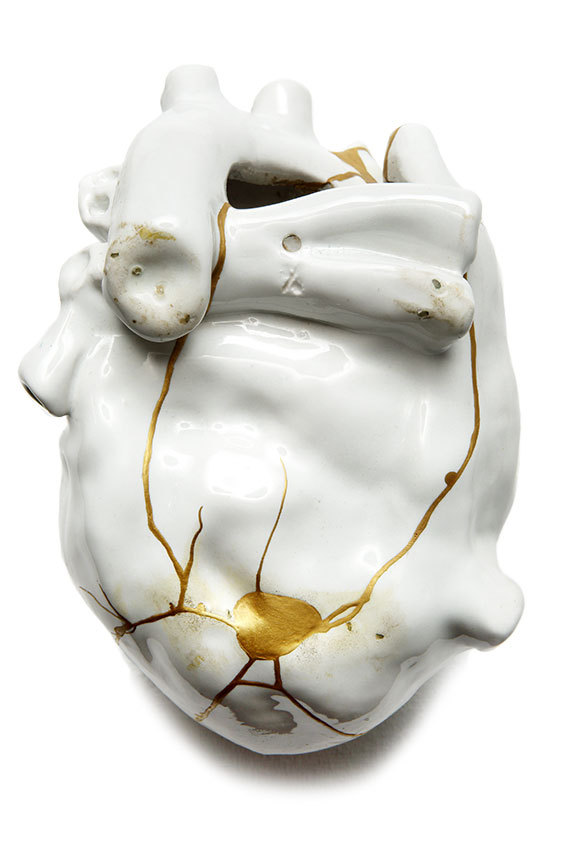
There is a beautiful Japanese art form called kintsugi. The artist takes broken ceramics and puts them back together by filling the cracks and places where they broke with gold, turning the art into something even more strikingly marvelous.

kintsugi
Kintsugi art

When Jesus comes to fill in the cracks in our desert hearts, He does the same thing. He redeems our scars, wounds, and dry places by giving us the gift of His whole self and making our scars dazzle with His love.

Let Him fill you today, brothers and sisters.

The Three Advents

Last weekend I had the great pleasure of participating in a silent retreat with my grandpa, dad, and two uncles. It’s been a Breen family tradition for some years now to visit Christ the King retreat center in The Other Buffalo (Buffalo, MN).

This was a particularly challenging retreat, for whatever reason, but it was also particularly inspirational: I felt empowered to enter Advent with a fresh set of eyes and grace. I’d like to share one of the core takeaways I experienced.

In a spiritual direction meeting with one of the priests on retreat, we discussed St. Bernard of Clairvaux, who spoke of the Three Comings of the Lord or the three Advents. The first was his Incarnation, in “flesh and weakness”. We are also told of the Second Coming in “glory and majesty” at the end of days. The middle and third Advent, however, is where Christ comes to us in “Spirit and power” every day of our earthly existence. Jesus meets us in the sacraments, in prayer, in the people we encounter every day. And this “third coming” is no less important than the other two! While Christ’s daily incarnation in our lives may not feel as momentous as Revelation and the end times, it is by no means invented: Jesus tells us in John 14:23 that, “whoever loves me will keep my word, and my Father will love him, and we will come to him and make our dwelling with him.”

For me, St. Bernard’s Three Advents had a personal parallel. Every year, it seems Advent flies by. There’s the Advent that others may experience: no thought of the “reason for the season” whatsoever; pure commercialism and chores and cooking, and,  “Sheesh, I could use a vacation from my holidays.” Then there’s the “ideal Catholic Advent”, spent immersed in prayer and quiet contemplation, racking up devotions and novenas like someone’s keeping score (jk, love you all who do it well!). And finally, there’s the Advent that most of us experience: somewhere in the middle.

At the retreat this year, God spoke into this part of my life. He told me he didn’t want me to feel guilty for not having the ideal, but to strive for something greater than the mindless. Most profoundly, God asked me to reflect on how Mary, Joseph, and Jesus experienced the first Advent. Did they spend hours in quiet contemplation in the temple? That’s not the version I’ve heard. I was inspired to think of the Holy Family, making a home wherever they could, and ultimately celebrating Emmanuel’s arrival in a stable/cave. They were living a real life, just like we do. They were a real family, just like mine. God does not call us to rise above our family life to some sort of mystical state of prayer during Advent, he came for just the opposite: to redeem the human experience and to sanctify family life!

My guilt for not setting aside more time in prayer melted away.

Don’t get me wrong. Prayer is essential. Meditation and contemplation are wonderful. A mystical state of prayer is Catholic #goals. But many of us also live lives with very real demands THAT COME FROM OUR VOCATION. I am busy because God has called me to be a husband and a father. Since he has called me, HE WILL MEET ME THERE. When God calls us to our vocation, he is also promising to meet us there! For those who do not live the monastic life, our role models do not need to be the monks!

Instead, I felt the Lord calling me to reflect on how the Holy Family lived the first Advent: Christ’s quiet coming in the night. I felt the Lord calling me to drop the shame and instead seek for the moments where I could ponder Jesus in my heart. Mary and Joseph are my examples this season, and I feel free.

Praised be Jesus Christ, true God and true Man.

Cluttered Hearts

“O house of Jacob, come,
let us walk in the light of the LORD!” -Isaiah 2:5

Advent is upon us, and it seems like each year my heart cries out with more and more longing for the coming of our Savior.

Jesus, we need You.

We need You in our broken and hurting world full of darkness, sin, and deep, deep pain.

We need You to be the center of our families, our marriages, our friendships. We need You to heal our relationships with others.

We need You in our workplaces.

We need You in our bleeding Church; oh how we need You to make all things new and right. We need You to bind up our wounds, to bring mighty justice, to shine Your piercing light into the darkness of the appalling sin, shame, hiding, and cover-up, to direct our next steps and to guide us forward.

We need You in the messy parts of our hearts, the parts we are too ashamed to tell other people about, the parts You see and love us anyway.

We need You to uproot and cast out shame, fear, and distrust of Your goodness from our lives.

We need You in every inch of the world, in every part of our beings, in the deepest depths of our souls. Every minute, every hour, every second—we need You.

Dear brothers and sisters, Advent is a season full of hopeful expectation of God’s saving power. It’s a season of light shining forth in the darkness. As we light each new candle of the Advent wreath, may we allow that much more of the light of Christ to pierce our hearts and renew us.

The other day in prayer, I imagined Jesus knocking on the door of the home of my heart, like a guest that comes forty-five minutes before the party when you’re still cleaning and haven’t showered. I imagined myself panic-stricken, trying to shove certain things behind the couch. And there He stood before me, smiling, seeing right through my couch cushions to all the mess and sin that I tried to hide. Yet He responded with nothing but tenderness. His kindness leads to our conversion.

We need to let Jesus in before we feel ready. Sometimes we need Him to help point out where we need to grow, and sometimes we need the affirmation of knowing that He loves us just the same no matter what mess we have in our hearts. He takes us as we are. When we let our Savior in, prepared or not, He speaks to our cluttered and weary hearts, “You are good. You are seen. You are known. I love you fully, as you are.”