A Tiny Whispering Sound

Abraham_Bloemaert_-_Landscape_with_the_Prophet_Elijah_in_the_Desert_-_WGA2277

At the mountain of God, Horeb,
Elijah came to a cave, where he took shelter.
But the word of the LORD came to him,
“Go outside and stand on the mountain before the LORD;
the LORD will be passing by.”
A strong and heavy wind was rending the mountains
and crushing rocks before the LORD—
but the LORD was not in the wind.
After the wind there was an earthquake—
but the LORD was not in the earthquake.
After the earthquake there was fire—
but the LORD was not in the fire.
After the fire there was a tiny whispering sound.
When he heard this,
Elijah hid his face in his cloak
and went and stood at the entrance of the cave.
—1 Kings 19:9–13

A tiny whispering sound. How gentle God is toward us. He is all-powerful; He created mountains and earthquakes and fire and wind. He could drop anvils and send down lightning to try and get our attention. And yet He speaks to us softly and tenderly.

He is the still, small voice within our hearts. He does not seek to control us; instead, He delights in watching us find our own way. He is always whispering words of guidance and love—and if we aren’t distracted by our own noise, we will hear His voice. But He does not force Himself upon us; rather, He pursues us with gentleness and care.

We are called to imitate this example of gentleness: to be both strong and kind, brave and humble, confident and caring. To be sensitive toward our neighbors without compromising our own strength. To respond to others without feeling as though we have to intimidate them or prove what we’re capable of. To be secure in the knowledge that withholding force is not a sign of weakness in us, but of composure and mercy.

Pier-Giorgio-PortraitLook to Blessed Pier Giorgio Frassati as an example: a strong, active young man who approached the poor and downtrodden with the utmost care. This was a guy who was popular and athletic, who regularly climbed mountains for fun. And yet he didn’t go around flexing his muscles to try and impress people; rather, his true strength showed through in his tenderness toward those who were weak.

When we feel frustrated and wish God would send us a big, loud, obvious sign from above, let us remember that maybe we wouldn’t actually be able to handle such a bold response. God speaks to us softly so as not to intimidate us, but also to draw us closer to Him. In order to hear His gentle whisper, we must draw ever nearer.


1. Abraham Bloemaert, Landscape with the Prophet Elijah in the Desert / PD-US
2. Portrait of Blessed Pier Giorgio Frassati / Brandon Vogt

The Hammer of the Heretics

Elijah appealed to all the people and said,
“How long will you straddle the issue?
If the LORD is God, follow him; if Baal, follow him.”
– 1 Kings 18:21

Therefore, whoever breaks one of the least of these commandments
and teaches others to do so
will be called least in the Kingdom of heaven.
But whoever obeys and teaches these commandments
will be called greatest in the Kingdom of heaven.
– Matthew 5:19

How long will I straddle the issue?

I love it when Scripture speaks so plainly. Reading this, the second verse from today’s readings, stopped me in my tracks. How long have I straddled issues in my life? What doubts, chronic sins, or bad habits have I allowed to take root in me?

So many times I get caught up in the lie of trying to get the best of both worlds (or more accurately in this case, ‘the best of both Heaven and Earth”). I want to be holy, but I want to be admired. I want to be deep, contemplative, and thoughtful, but I want to be recognized for it. I want to preach the Gospel, but I don’t want to come off as “preachy”.

How long will I straddle the issue?

Fitting, then, that today’s strong verbiage is accompanied by a strong saint’s feast day: St. Anthony of Padua, who is apparently also known as the “Hammer of the Heretics” (though the citations for this are dubious… but it’s a great name so let’s stick with it). St. Anthony’s witness was his life of prayer and preaching; he was (quite literally) tossed and turn on the waves of life and ended up following a much different path than expected: instead of risking martyrdom to preach to the Moors in Morocco, Anthony found himself in decidedly Catholic Italy. What could easily have felt like defeat, or at the very least a blow to his ability to live for God’s glory, instead led to the exact path he needed for sainthood.

St. Anthony shares much in common with our patron Pier Giorgio, chiefly a zeal for service and the Gospel of Jesus Christ. Wealth, glory, and fame were certainly within both of their respective reaches in life, and yet illnesses sidetracked their earthly plans to bring about even greater glory for God.

These men are an inspiration to me, giving me courage and faith that I could be a champion for God’s kingdom, even here and now in my current, humble state in life. What is needed is zeal and decisive faith. Elijah is calling to me: “If the LORD is God, follow him.”

Feast of St. Mary Magdalene de Pazzi

Indeed we call blessed those who have persevered.
—James 5:11

V0032624 Saint Mary Magdalen dei Pazzi. Etching by G. Fabbri, 1757.Today is the feast of St. Mary Magdalene de Pazzi, the patron of the parish I attended growing up. On a trip to Florence, Italy, years ago, I was able to visit her tomb and see the chapel where she experienced many mystical visions. The austerity of her life as a Carmelite, juxtaposed with the wealth and dominance of her prominent Renaissance family that was so evident throughout Florence, was striking.

The life of St. Magdalene was marked by extreme highs and extreme lows. She experienced both ecstasies and desolations, and often the two were intermingled. She once said, “Those who call to mind the sufferings of Christ, and who offer up their own to God through His passion, find their pains sweet and pleasant.” This paradox—the sweetness of suffering, the beauty of pain—encapsulates her philosophy and mission. She was determined to make her whole life an offering, both the joys and sorrows, the highest mountains and the lowest valleys along her path; everything was part of an unbroken hymn of praise to God.

Perugino,_crocifissione_con_la_maddalena,_la_madonna,_s._giovanni_e_i_ss._bernardo_e_benedetto,_1493-96,_01Beginning at the age of nine, St. Magdalene practiced mental prayer, cultivating an intimate friendship with Jesus. This is what prepared her for all her mystical experiences and desolations to follow. Through it all, she maintained this friendship, speaking to Jesus as a dear friend with frank sincerity and playful banter. When Jesus told her, “I called and you didn’t care,” she responded, “You didn’t call loudly enough.” She asked Him to shout His love. She was honest and genuine in her conversations with Jesus, and this intimacy was what gave her the grace to bear the sufferings she endured. Her ultimate motivation was to return the love of Jesus Christ: Love incarnate, who was neither known nor loved.

Pedro_de_Moya_-_Vision_of_St_Maria_Magdalena_di_Pazzi_-_WGA16308Blessed Pier Giorgio Frassati and St. Mary Magdalene de Pazzi share a few things in common: both were born into prosperous Italian families that valued status and wealth, both chose to forego earthly treasures and esteem for the sake of serving Jesus. Both were nourished by daily Communion, and both persevered in faith through many unexpected trials. Their charisms and personalities were very different—Pier Giorgio was a man of action, while St. Magdalene was a Carmelite devoted to contemplative prayer—but each was motivated first and foremost by a relationship with Jesus. This enabled them to discover their own unique gifts and callings and to offer everything back to Him in love.

St. Magdalene de Pazzi teaches us to be thankful for whatever season we are in, always persevering in prayer and penance. Every experience can be a channel of grace. In our joys, may we not forget our need for God, and in our sorrows not abandon our trust in Him. Above all, if we are rooted in friendship with God as St. Magdalene was, our lives will take on renewed purpose.

O Love, You are neither known nor loved!
—St. Mary Magdalene de Pazzi


1. G. Fabbri, etching of St. Mary Magdalene de Pazzi / Wellcome Images / CC BY 4.0
2. Pietro Perugino, Crocifissione, la Vergine, San Giovanni, la Maddalena e i Santi Bernardo e Benedetto, fresco from the Chapel of St. Mary Magdalene de Pazzi, Florence / CC BY-SA 3.0
3. Pedro de Moya, Visión de Santa María Magdalena de Pazzi / PD-US

Grief into Joy

Jesus said to his disciples:
“Amen, amen, I say to you, you will weep and mourn,
while the world rejoices;
you will grieve, but your grief will become joy.
When a woman is in labor, she is in anguish because her hour has arrived;
but when she has given birth to a child,
she no longer remembers the pain because of her joy
that a child has been born into the world.
So you also are now in anguish.
But I will see you again, and your hearts will rejoice,
and no one will take your joy away from you.
On that day you will not question me about anything.
Amen, amen, I say to you,
whatever you ask the Father in my name he will give you.”
—John 16:20–23

Often we have a tendency to assume—even, sometimes, when we know better—that if we follow Jesus perfectly, we will live a charmed life free of suffering. Thus, when we experience suffering that seems “undeserved,” we become frustrated with God and think that there’s no way we can handle what He’s asking of us.

Christ_in_Gethsemane

But Jesus doesn’t negate the suffering of the Christian life. He acknowledges it fully, saying that if they persecuted Him they will surely persecute us. He tells us we will weep and mourn and grieve while the world rejoices. Yet our pain and suffering are not wasted in His plan of salvation. When we meet Jesus in Heaven, when we see the destination to which He has led us on such a long, winding journey, our hearts will rejoice. We will receive a lasting joy, greater than anything of this world.

We will experience suffering in this life, but through Christ, this suffering becomes a holy calling. We don’t need to put on a happy face and pretend everything is fine—no, this trial is a gift, meant to break and re-form our hearts, making them more like His own. We can embrace our suffering and lean in to it. And we don’t need to spiral into despair, either, for this trial is not the end. A greater joy awaits us, a joy that will eclipse any memory of pain.

piergiorgioOur patron, Blessed Pier Giorgio Frassati, was a joyful, exuberant young man who radiated hope. He loved to have a good time with his friends, sharing inside jokes and enjoying outdoor activities. But at the same time, he did not shy away from suffering. Although he easily could have stayed within the comfortable bubble of wealth provided by his family, he ventured into the poorest parts of his city, undeterred by the noise and smells, to seek those who needed company and support. He saw the beauty in each person he encountered and considered them friends. His passion for the Lord propelled him to serve, and even when he contracted a fatal disease through this service, he embraced this, too, as a gift. His love for Christ emboldened him to face every trial without fear.

Fear not. As Christians, we always have reason for hope. Inspired by the example of Pier Giorgio, may we face our sufferings with boldness and joy, knowing that all our earthly pain will pass away and that the joy to come is worth it all.

We are an Easter people, and hallelujah is our song.
—Pope Saint John Paul II


1. Heinrich Hofmann, Christ in Gethsemane / PD-US
2. Photograph of Bl. Pier Giorgio Frassati and friends

Knowing the Holy Spirit

Jesus said to his disciples: “When the Advocate comes whom I will send you from the Father, the Spirit of truth who proceeds from the Father, he will testify to me. And you also testify, because you have been with me from the beginning.

– John 15

On Friday, Erin reflected on the mystery of friendship that Jesus offers us. Jesus mentions a very important fruit of this friendship in today’s Gospel: He sends us the Holy Spirit. At first (and not just at first, honestly) the Holy Spirit seems rather mysterious: Who is He? What is He? How does He do His thing today, in 2018, in my life? How can we come to know Him?

The Catechism of the Catholic Church paragraph 688 is a helpful guide:  

“The Church, a communion living in the faith of the apostles which she transmits, is the place where we know the Holy Spirit:

– in the Scriptures he inspired;
– in the Tradition, to which the Church Fathers are always timely witnesses;
– in the Church’s Magisterium, which he assists;
– in the sacramental liturgy, through its words and symbols, in which the Holy Spirit
puts us into communion with Christ;
– in prayer, wherein he intercedes for us;
– in the charisms and ministries by which the Church is built up;
– in the signs of apostolic and missionary life;
– in the witness of saints through whom he manifests his holiness and continues the work of salvation.”

So in other words, we find the Holy Spirit and come to know Him wherever we find the Church.  Read a biography of Bl. Pier Giorgio Frassati, and you’ll find he was working the entire list pretty hard – because he sought to live fully within the Church! What Erin said about mystery in general is very applicable here: “no matter how deeply we study this complex truth, there will always be more layers of understanding to peel back, always something new to learn.” The list above is not exhaustive by any means – there are many, many ways to know the Holy Spirit and to welcome Him into your life in a deeper way!

My challenge for you today: spend some time in prayer with the list above. Pray the simple prayer “Come, Holy Spirit!” throughout your day. Ask the Holy Spirit in what ways He wants you to come to know Him. And then be open! Have confidence that through your life, the Holy Spirit will testify the love of the Father to the world as shown through the life, death, resurrection, and ascension of Jesus.

Come Holy Spirit!

Pax et bonum,
Andy

Remain in Me

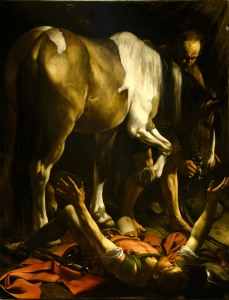
Domenico_Morelli_-_Conversione_di_san_PaoloToday’s first reading describes the dramatic conversion of St. Paul. Before meeting Jesus on the road to Damascus, Paul was “breathing murderous threats against the disciples of the Lord,” and yet today we remember him as a great evangelizer and prolific New Testament writer. What happened? Nothing less than an inbreaking of divine grace.

For the powers of humanity, there are a great many situations that are beyond hope: souls that have been irrevocably corrupted, systems that are beyond repair. But for God, no one is beyond hope. No matter how hardened a person, God can break through any barriers to offer them mercy and an opportunity for transformation. He stopped Paul right in his murderous path, turned him away from Damascus and out into all the world a changed man. He channeled Paul’s zeal toward its natural, rightly ordered purpose: building up the Kingdom of God. In the same way, our own human purpose can only be understood through an encounter with the divine.

Whoever eats my Flesh and drinks my Blood remains in me and I in him (John 6:56).
Jesus has given Himself to us in the Eucharist as an opportunity for encounter with Him, that we too might be transformed by His grace. He instituted this sacrament so that we might share a radical intimacy with Him. Blessed Pier Giorgio Frassati understood this deeply—he received Communion daily, meeting Jesus every morning and carrying Him throughout the rest of the day. This is the key to his sanctity: not Pier Giorgio’s own goodness, but his openness to divine grace, to deep intimacy with and vulnerability before God.

“I urge you with all the strength of my soul to approach the Eucharist Table as often as possible. Feed on this Bread of the Angels from which you will draw the strength to fight inner struggles.”
—Blessed Pier Giorgio Frassati

Conversione_di_san_Paolo_September_2015-1aThe great things that Paul achieved after his conversion stemmed from this intense closeness with God and awareness of God’s perfect love. This is what opened Paul’s heart to allow God to work through him rather than imposing his own will. When the scales fell from his eyes and he saw his life with sudden clarity, he fell to his knees in humility before God. Throughout the rest of his life, as he wrote and preached and converted a great many souls, he was ever aware that it was all due to God working in him: It is no longer I who live, but it is Christ who lives in me (Galatians 2:20). Paul knew all too well the cold, cruel man he would be without God, and thus he was able to recognize that any good fruits that flowed from his work were not due to his own power or talent or goodness, but from Jesus Christ working through him.


1. Domenico Morelli, Conversion of Saint Paul / PD-US
2. Caravaggio, The Conversion of Saint Paul / PD-US

Ite Ad Joseph!

Behold, the angel of the Lord appeared to him in a dream and said,
“Joseph, son of David, do not be afraid to take Mary your wife into your home.
For it is through the Holy Spirit that this child has been conceived in her.
She will bear a son and you are to name him Jesus, because he will save his people from their sins.”
When Joseph awoke, he did as the angel of the Lord had commanded him and took his wife into his home.

I recently finished the first book in the novel Kristin Lavransdatter. Laverns (father of the main character) strives to be a good father to his daughters, to love them and teach them to God, the Church, their family, and their neighbors, especially the poor. I am amazed that the struggles of fatherhood do not look that different whether you have daughters in 21st-century America or 14th-century Norway. Over the past year and a half I have wrestled with, prayed through, and pondered the questions: what does it mean to be a good father? Am I a good father? How can I become a better father? And often a simple answer comes: Be like St. Joseph – Sleep more and talk less! (I need help with both – just ask my wife)

But this answer – although both humorous and true – only skims the surface. More than his affinity for rest and silence, in St. Joseph we find a friend who was patient, humble, just, merciful, and attentive and obedient to the will of the Lord. He – like all of us – encountered difficult and unexpected situations in his life, and followed the Lord onto uncomfortable, even painful paths on which he would otherwise not dare to trod. He wants to accompany us on the difficult roads of this life, to protect and guide us as he protected and guided Jesus and Mary.

I do not know if Bl. Pier Giorgio Frassati had a devotion to St. Joseph, and cannot confess intimate familiarity with his writings. Based on his attraction to his friend Laura and his love for the faith, I imagine that he would have had both a love and respect for St. Joseph, and a deep desire for fatherhood. This desire was frustrated by his parents and his illness/death – yet neither of these roadblocks kept Bl. Frassati from following the Lord and knowing joy even in the sufferings.

What would St. Joseph’s path been had the Father not chosen Him to father His Son? Would He still be a saint? How would he have responded to the challenges of life? And Bl. Frassati – what other great deeds would he have done had he not gone Home at such a young age? As Erin said last week, these final days of Lent can be the hardest. So today during your prayer, turn to St. Joseph and Bl. Frassati, and ask them to pray for you to be open to the will of the Father in your life, to allow Him to lead you into – and out of – the valleys of tears, trusting that He is near, and He is bringing you closer to His love through it all.

Pax et bonum,
Andy